Kiyomizudera Autumn Illumination 2026: Complete Guide to Momiji Kouyou & Night Foliage in Kyoto
What is the Kiyomizudera Autumn Illumination?
Few spectacles in all of Japan rival the breathtaking beauty of the Kiyomizudera autumn illumination 2026, a seasonal evening event that transforms one of Kyoto’s most beloved UNESCO World Heritage Sites through to a glowing wonderland of crimson, amber, and gold. Kiyomizu-dera Temple, perched dramatically on the forested hillside of Higashiyama, has stood for over 1,200 years as a symbol of Kyoto’s spiritual heart. Founded in 778 CE and rebuilt in its current form in 1633 under the patronage of Tokugawa Iemitsu, the temple draws millions of visitors annually — but none of those visits compare to the magic of witnessing it bathed in soft, atmospheric light during the peak of Japan’s autumn foliage season.
The term kouyou (紅葉) refers to the Japanese tradition of appreciating the changing autumn leaves, a cultural practice as deeply embedded in the national psyche as cherry blossom viewing in spring. At Kiyomizu-dera, this tradition takes on an almost otherworldly dimension. The Kiyomizu-dera momiji matsuri celebrates the season’s peak with carefully choreographed illuminations that highlight the temple’s iconic wooden stage — jutting out over a cliff, supported by 139 interlocking pillars assembled without a single nail — as well as the surrounding hillside ablaze with red maple leaves and golden ginkgos. The combination of centuries-old architecture, natural autumn colour, and artistic lighting design makes this one of the most photographed events in the entire Japan events calendar.
International tourists flock to this Kyoto fall foliage festival 2026 not only for its visual splendour but for the profound sense of cultural immersion it provides. There is something deeply moving about standing on the famous stage of Kiyomizu-dera at dusk, watching the last light fade over the city of Kyoto below while the illuminations gradually intensify around you. The scent of incense drifts through the cool November air, temple bells echo softly across the valley, and the pond at the temple’s base mirrors an inverted world of burning autumn colours. This is Japan at its most poetic.
When and at which to Go
The Kiyomizudera autumn illumination dates times 2026 are confirmed as running nightly through Sunday 22 November to Monday 7 December 2026. This window is carefully chosen each year to coincide with the peak of Kyoto’s kouyou season on the Higashiyama hillside. The illuminations typically switch on at sunset, around 17:30, and continue until 21:00, with last entry usually accepted until 20:30. Daytime visits to the temple are also possible and beautiful, but serious travellers and photographers will want to plan specifically for the evening illumination sessions.
Venue: Kiyomizu-dera Temple (清水寺)
Address: 1-294 Kiyomizu, Higashiyama-ku, Kyoto, 605-0862
Entry fee: Approximately ¥400 for adults (daytime); a separate evening illumination ticket is typically required, priced around ¥400–¥500 — check the official temple website closer to the date for confirmed 2026 pricing.
Hours: Evening illumination sessions run approximately 17:30–21:00 (last entry 20:30)
Note: Dates and times are subject to change; always verify details via the official Kiyomizu-dera website or Kyoto events listings before your visit.
What to Expect
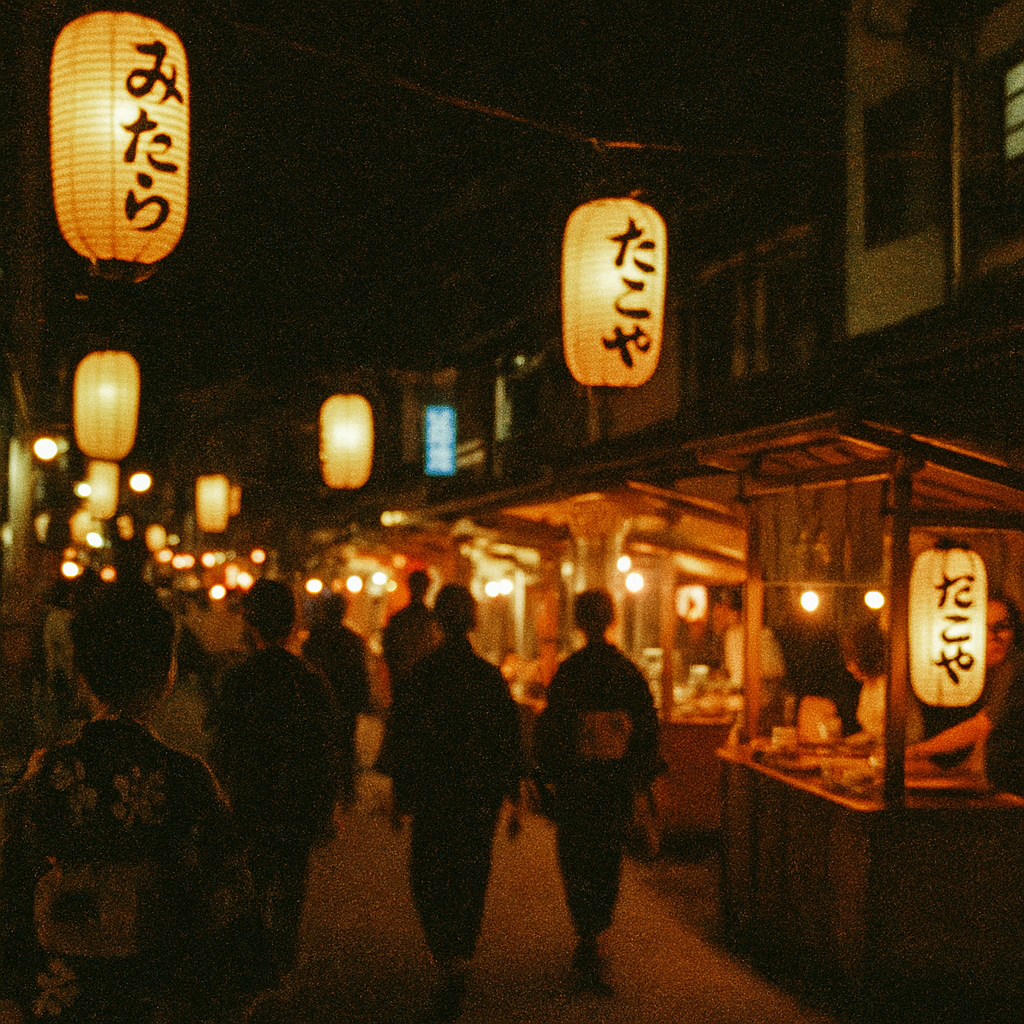
Arriving at Kiyomizu-dera as twilight descends over Higashiyama is an experience that engages all the senses simultaneously. The steep, stone-paved approach lanes — Ninenzaka and Sannenzaka — are lined with traditional wooden machiya townhouses converted through to tea shops, souvenir stalls, and lantern-lit restaurants, all radiating a warm amber glow through to the cooling evening air. The scent of roasted green tea and freshly griddled yatsuhashi (Kyoto’s beloved cinnamon-and-bean-paste confection) drifts across the cobblestones as visitors in rented kimono pick their way carefully uphill, their wooden geta sandals clicking a gentle rhythm. By the time you pass through the temple’s vermilion gates, the illuminations are in full effect: floodlights and carefully positioned uplighting paint the surrounding maple trees in extraordinary shades of scarlet and tangerine, the colours intensifying as full darkness falls.
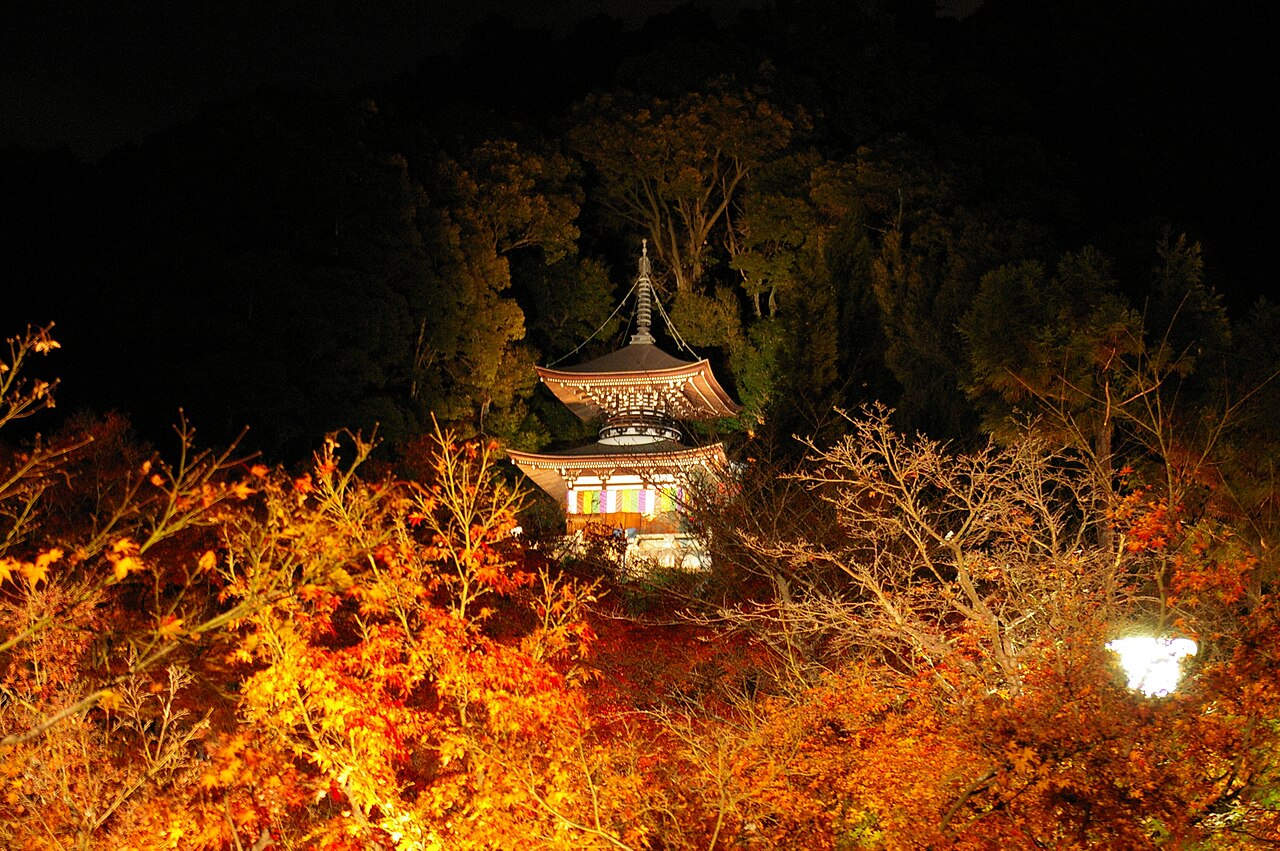
The centrepiece of the autumn maple leaves Kyoto experience is, of course, Kiyomizu-dera’s famous wooden stage, jutting out over the valley canopy in a blaze of illuminated colour. Below the stage, the Otowa waterfall — a sacred site at which visitors drink three streams of water representing longevity, love, and academic success — glimmers in the half-light. Further down the hillside, the Jishu Shrine pond becomes a mirror of extraordinary clarity on calm evenings, offering the quintessential Kiyomizudera temple pond reflection autumn leaves shot that photographers travel thousands of kilometres to capture. The air carries a satisfying chill — rarely brutal this early in December — and the atmosphere, despite the crowds, manages to feel intimate and genuinely magical. The combination of sacred space, seasonal beauty, and theatrical lighting creates a moment of collective wonder reminiscent of the very best of Japanese cultural tradition.
Highlights & Must-See Moments
- The Main Stage at Full Illumination: Stand on Kiyomizu-dera’s iconic wooden stage after dark and look out over the illuminated treetops cascading down the valley. The red maple leaves Japan autumn palette, lit dramatically against a deep blue sky in the early evening, is extraordinary. This is the defining image of the kouyou festival Kyoto 2026 — arrive early for a spot at the railing without the press of the crowd.
- The Pond Reflection Shot: Make your way down to the lower precincts near Otowa-no-taki waterfall and look back up at the temple silhouetted against the illuminated hillside. On still evenings, the pond at the base of the slope throws up a near-perfect mirror image of burning foliage and glowing temple structures — an unmissable opportunity for Kiyomizudera yozakura autumn illumination photography.
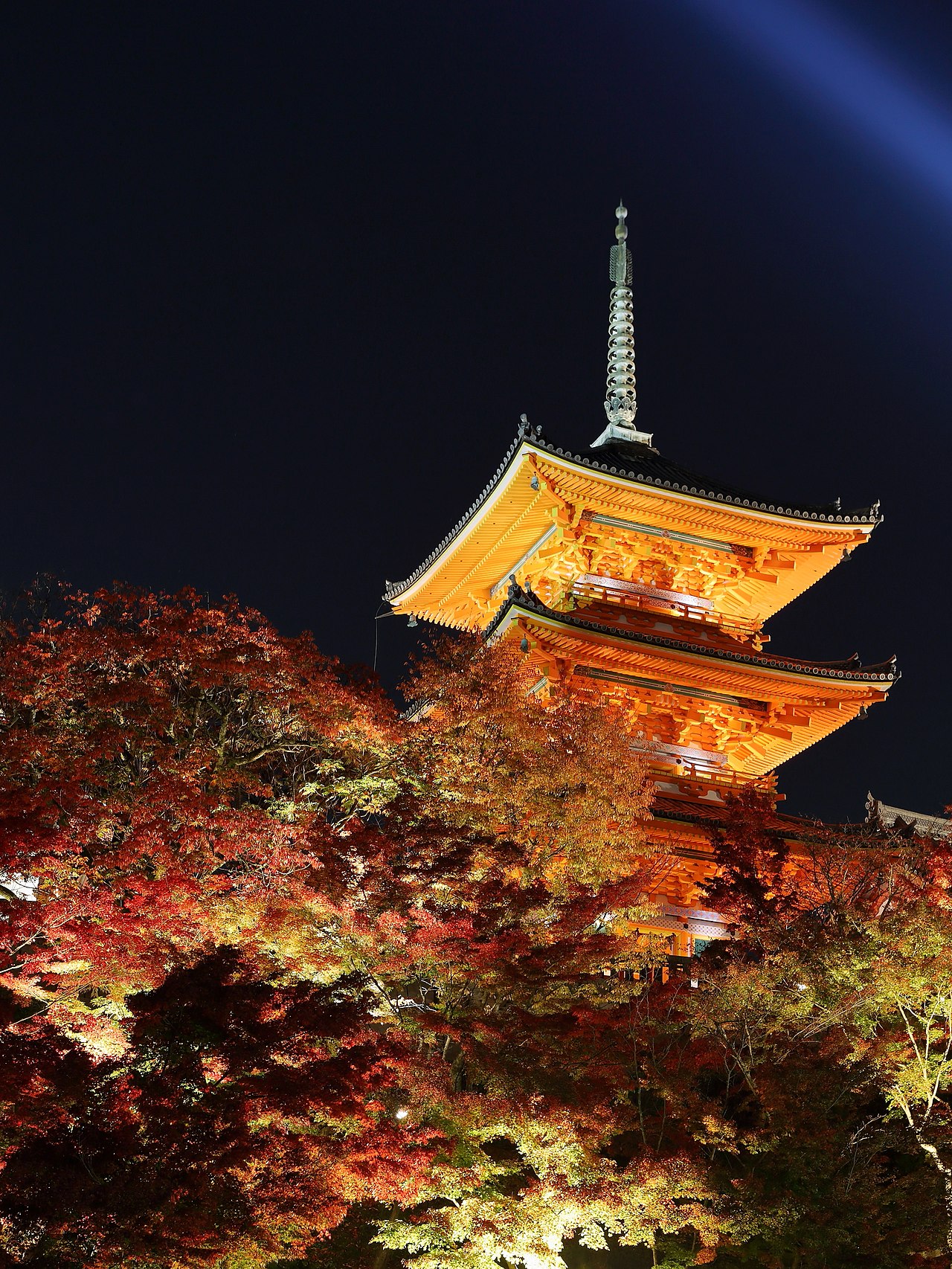
- The Three-Pagoda Panorama: Step across to the viewpoint near Koyasu Pagoda on the south side of the temple complex. At this location you’ll discover an unobstructed panoramic view back toward the main hall with the three-storey pagoda and the full sweep of illuminated autumn trees — one of the most spectacular wide-angle compositions available in any location in Japan during autumn.
- Ninenzaka and Sannenzaka at Night: Do not rush down the hill after the temple. These UNESCO-protected stone-paved lanes are hauntingly beautiful under lantern light after dark, with far fewer visitors than during daytime hours. Pause at a tea house for a cup of hot matcha or a small dish of seasonal kuri kintōn (chestnut sweet) — a warming reward after the cool evening air.
- Otowa Waterfall Ceremony: Even in the evening, visitors queue to drink at the three sacred streams of Otowa waterfall, an ancient ritual that carries extra resonance during this spiritually charged autumn season. The sound of the water against the surrounding silence of the illuminated evening is one of those quietly unforgettable travel moments.
Practical Tips for Visitors
Best time to visit: For the best time to see autumn foliage Kiyomizudera 2026, aim for the final week of November through the first few days of December, spanning approximately 27 November through 3 December, at which point the maple colours are expected to peak on the Higashiyama hillside. Arriving at the temple gate around 17:00 — shortly before illuminations begin — lets you experience the transition spanning full daylight through to full dark illumination, which is arguably more spectacular than arriving after dark. Weeknights are significantly quieter than weekends; if your schedule allows, a Tuesday or Wednesday evening will reward you with far more manageable crowd levels.
What to wear and bring: Late November and early December evenings in Kyoto can be genuinely cold, with temperatures regularly dropping to 5–8°C after sunset. Layer up with a thermal base layer, a warm mid-layer, and a wind-resistant outer jacket. Comfortable, sturdy walking shoes are essential — the stone approaches can be slippery underfoot in the evening damp. Bring a compact tripod or gorilla pod for long-exposure photography at the pond reflection spots; the low-light conditions reward patience. A portable battery pack for your phone or camera is strongly recommended. Cash is always useful at the temple entry gate and the smaller food stalls along the approach. Arrive with your entry ticket purchased in advance if online ticket sales are offered for 2026 — this will save considerable time in queues.
Crowd avoidance strategy: The Kiyomizudera night illumination is enormously popular, drawing tens of thousands of visitors across its run. The first and last few days of the illumination period typically see smaller crowds than the peak weekend sessions in late November. Arriving right at the illumination opening time (around 17:30) rather than at 19:00–20:00 makes a meaningful difference. Exit via the north gate toward Kiyomizumichi bus stop rather than back down Sannenzaka if you wish to avoid the departing crowd bottleneck.
How to Get There
Kiyomizu-dera sits in the Higashiyama district of eastern Kyoto, and reaching it via public transport is straightforward for visitors navigating Japan’s excellent bus and rail network.
Via Kyoto Station (JR/Shinkansen): Take Kyoto City Bus route 206 or 100 departing Kyoto Station Bus Terminal (stop D2) toward Gion/Higashiyama. Ride to the Gojozaka or Kiyomizumichi stop, then follow the well-signposted 10–15 minute uphill walk along the stone-paved approach lanes to the temple entrance. Journey time spanning Kyoto Station: approximately 20–25 minutes total.
Via Keihan Kiyomizu-Gojo Station: Departing Osaka or via the Keihan Main Line, alight at Kiyomizu-Gojo Station. The temple is a steady 20-minute uphill walk along Gojozaka. This route is particularly pleasant, passing traditional Kyoto architecture en route.
Via Hankyu Kyoto Line (Kawaramachi Station): Alight at Kyoto-Kawaramachi and take City Bus route 207 toward Higashiyama-Yasui stop, then walk approximately 10 minutes uphill along Sannenzaka toward the temple.
Taxi: Taxis are readily available throughout central Kyoto and will drop passengers at the foot of the Kiyomizumichi approach. Note that during peak autumn weekends, road congestion in the Higashiyama area can significantly extend journey times. Walking or cycling along the canal path off Higashiyama-dori is often faster.
Nearby Attractions
Maruyama Park and Chion-in Temple: A 15-minute walk north along Higashiyama-dori, Maruyama Park is Kyoto’s most beloved public park and puts on its own spectacular autumn foliage display amid its traditional Japanese garden landscape. Abutting the park, the imposing Chion-in Temple — headquarters of the Jodo sect of Buddhism — is home to Japan’s largest temple bell and a series of magnificent moss-covered gardens. Both are beautiful in the autumn evening light, and their proximity to Kiyomizu-dera makes them an ideal extension of a Higashiyama evening walk.
Yasaka Shrine (Gion): Continue north along the Higashiyama promenade to reach Yasaka Shrine, which anchors the western end of the Gion entertainment district. The shrine is open at all hours and its lantern-lit precinct glows invitingly at night. The surrounding Gion streets — particularly Hanamikoji-dori — offer some of Kyoto’s finest dining, spanning intimate kaiseki restaurants to casual yakitori stalls, making this the ideal spot to conclude an evening spent among the autumn leaves.
Fushimi Inari-Taisha: For visitors spending multiple days in Kyoto, Fushimi Inari-Taisha — the famous shrine of ten thousand vermilion torii gates — is approximately 30 minutes via Kyoto City Bus or the JR Nara Line departing Tofukuji Station. While not specifically an autumn illumination venue, the mountain trail at this location is atmospheric at any season, and combining it with a morning visit before heading to Kiyomizu-dera for the evening illumination makes for an exceptionally full and rewarding Kyoto day. Explore more inspiration through our guide to Japan travel planning.
Frequently Asked Questions
Q: When is the Kiyomizudera illumination 2026, and do I need to book tickets in advance?
A: The Kiyomizudera autumn illumination 2026 runs nightly spanning 22 November through 7 December 2026, with illuminations active approximately 17:30–21:00 each evening. Tickets have historically been purchasable at the gate on the night, but given increasing visitor numbers in recent years, checking whether advance online booking is available for 2026 is strongly recommended. Purchasing ahead not only saves queuing time but guarantees entry on your preferred date, especially important during peak weekend sessions in late November.
Q: What is the best time to see autumn foliage at Kiyomizudera in 2026?
A: The best season to visit Kiyomizudera for red maple 2026 is typically the final week of November, at which the Japanese maple trees on the Higashiyama hillside reach their peak colour. Kyoto’s kouyou season generally spans mid-November through early December, with the most vivid reds and oranges peaking spanning approximately 25 November through 5 December in a typical year. Actual peak timing varies year to year depending on weather patterns, so monitoring Japanese kouyou forecast websites in the week prior to your visit is advisable.
Q: How do I get to the Kiyomizudera illumination festival in Kyoto by public transport?
A: The most straightforward route for most international visitors is via Kyoto City Bus routes 206 or 100 departing Kyoto Station Bus Terminal, alighting at Gojozaka or Kiyomizumichi stops, followed by a 10–15 minute uphill walk along the stone-paved approach. Visitors arriving via the Keihan railway can alight at Kiyomizu-Gojo Station and walk approximately 20 minutes uphill. During peak autumn evenings, buses may be crowded; building extra travel time through to your schedule is sensible.
Q: Is the Kiyomizudera temple pond reflection visible during the illumination?
A: Yes — the Kiyomizudera temple pond reflection autumn leaves is one of the most celebrated photography subjects of the entire event. The still-water pond in the lower precincts, near Otowa waterfall, reflects the illuminated maple trees and temple structures with stunning clarity on calm, wind-free evenings. Arriving at dusk rather than full dark gives you the added bonus of a rich blue-sky backdrop during the so-called “blue hour,” at which the reflection colours are at their most vivid. A small tripod is highly recommended for capturing this shot cleanly in the low-light conditions.
Q: What should I eat and drink near Kiyomizudera during the autumn illumination visit?
A: The Ninenzaka and Sannenzaka approach lanes are lined with excellent food options. Look for yatsuhashi (cinnamon rice-flour sweets, Kyoto’s signature souvenir), hot matcha and amazake (warm, lightly sweet fermented rice drink — ideal for cold evenings) while seasonal kuri (chestnut) wagashi sweets at traditional tea houses. For a fuller meal, the Gion district a short walk north offers everything spanning casual ramen and yakitori to elegant kaiseki multi-course dining. Reservations are strongly advised at higher-end Gion restaurants during the peak kouyou season.
The Kiyomizudera autumn illumination 2026 is, quite simply, one of the great seasonal events in all of Asia — a perfect confluence of ancient architecture, sublime natural beauty, and the deeply Japanese art of finding profound meaning in transience. Whether you are a first-time visitor to Japan overwhelmed by Kyoto’s abundance of riches, or a returning traveller seeking to deepen your relationship with a city you already love, this event delivers an experience that will stay with you long after the leaves have fallen. Mark your calendar, pack your warmest layers, charge your camera, and let the glowing hillside of Higashiyama remind you exactly why autumn in Kyoto is considered one of the great travel experiences on earth. For more seasonal festivals and cultural events across the country, explore our full guide to Japan festivals and start planning your perfect itinerary today.