Eikando Autumn Illumination Kyoto 2026: Complete Guide to Kouyou & Momiji Viewing
What is the Eikando Autumn Illumination?
Nestled along the scenic Philosopher’s Path in Kyoto’s Sakyo Ward, Eikando Zenrinji Temple transforms each November through to one of Japan’s most breathtaking autumn showcases. The Eikando autumn illumination Kyoto 2026 is a much-loved seasonal matsuri that draws visitors year after year to witness the temple’s legendary maple trees — hundreds of momiji that erupt through to a breathtaking palette of crimson, amber, tangerine, and gold. Eikando has been cherished as a prime kouyou momiji viewing Kyoto destination for centuries, and the evening illumination event transforms this already magnificent landscape through to something genuinely otherworldly.
The temple itself dates to 853 CE, founded by the monk Shinshō as a place of meditation and Buddhist practice. Today, the Jōdo-shū sect administers the grounds, and the site holds deep spiritual significance for Japanese devotees who make pilgrimages here annually. Yet it is the autumn season that truly etches Eikando through to the hearts of international travellers. The famous statue of Mikaeri Amida — the Buddha who looks back over his shoulder — serves as the temple’s spiritual centrepiece, and the poetic idea of a divine figure pausing to reflect perfectly captures the meditative mood of autumn’s fleeting beauty. The momiji matsuri Japan spirit runs deep here: this is not merely a tourist spectacle, but a living cultural ritual tied to centuries of Japanese aesthetic tradition.
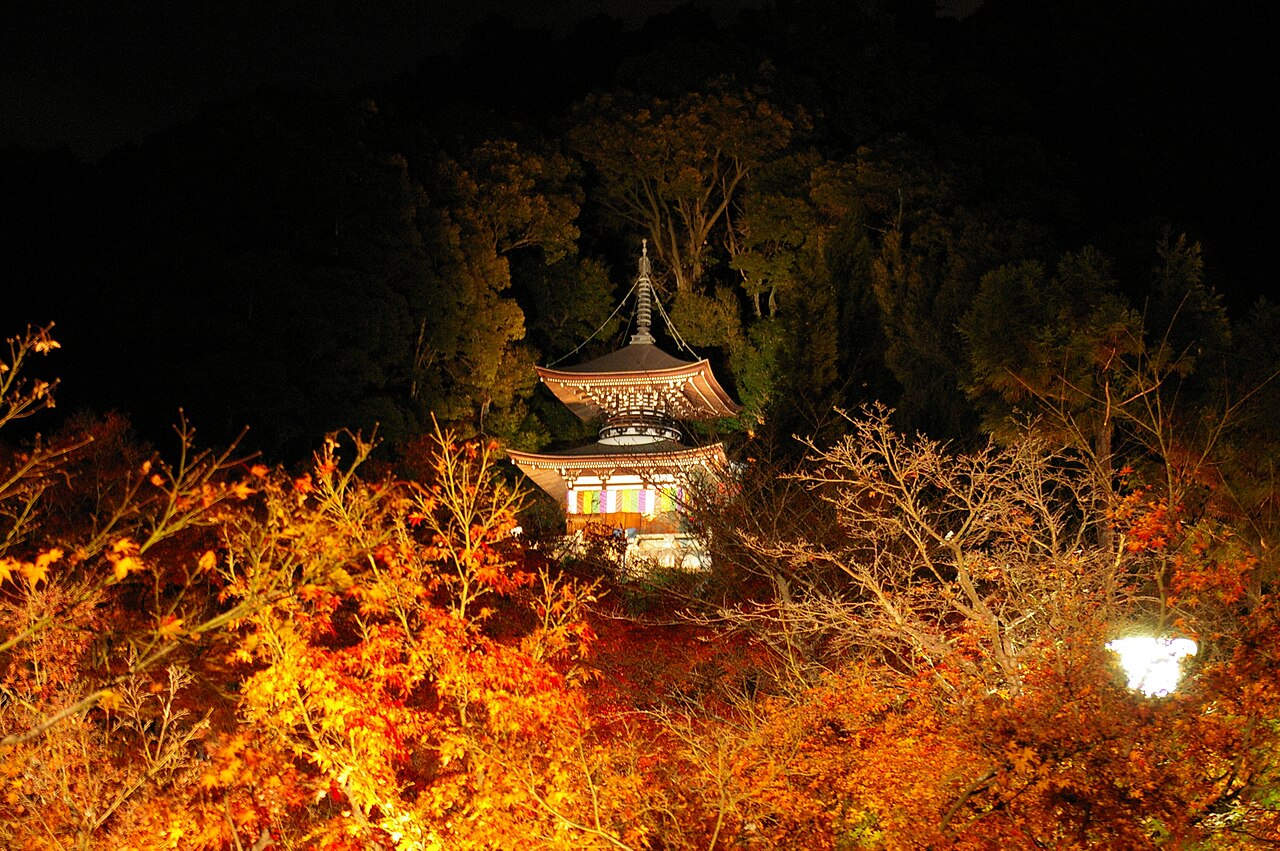
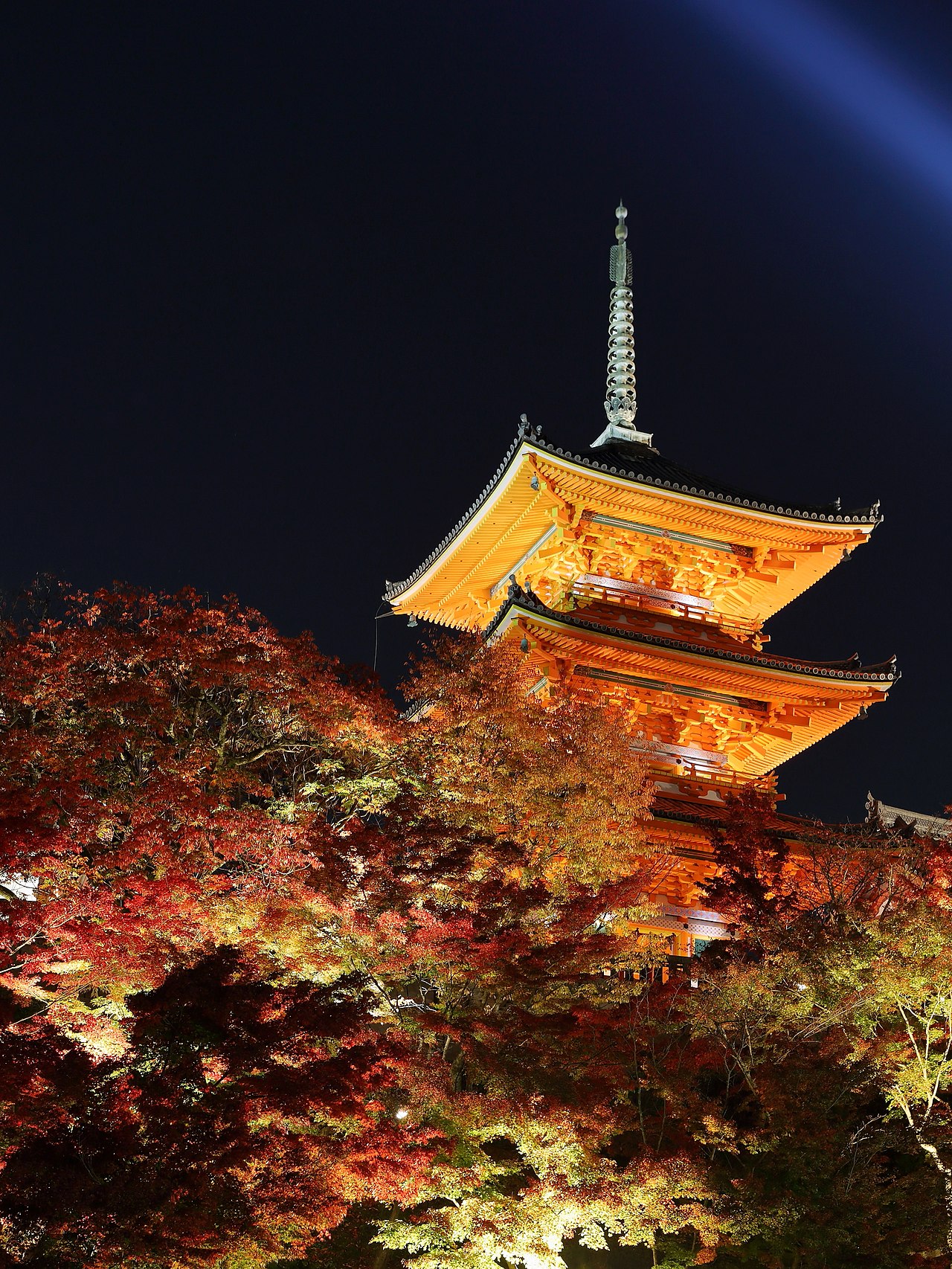
What distinguishes the Eikando autumn illumination Kyoto 2026 event specifically is the after-dark magic. During the special evening illumination hours, carefully positioned spotlights cast a warm glow across the maple canopy, making the leaves appear to burn with an inner fire. Reflections ripple across the temple’s central pond, doubling the visual spectacle. International tourists consistently rank Eikando among the best autumn illumination spots Kyoto 2026 has to offer, and it is easy to understand the fervour — there are very few places in the world that achieve this particular alchemy of architecture, nature, light, and water.
When and at which to Go
The Eikando autumn illumination Kyoto 2026 runs officially 15 November through 10 December 2026, making it a generous window for planning your visit. This span is strategically chosen to capture the full arc of fall foliage Japan 2026, encompassing both the electric early peak and the quieter, more contemplative later days as leaves begin to fall. If you are wondering when is Eikando kouyou season Kyoto 2026, peak colour typically lands in the final week of November — aim for 20–30 November for the most intense display, though forecasts can shift depending on the year’s temperatures.
Daytime visiting hours run approximately 9:00 AM to 5:00 PM (last entry 4:30 PM), giving visitors ample time to explore the multi-level garden landscape. Evening illumination hours operate separately, generally 5:30 PM to 9:00 PM (last entry 8:30 PM), so you will need to purchase an additional evening ticket if you wish to experience the Eikando temple night illumination. Admission fees are typically around ¥600 for daytime access and ¥600 for the evening session, though exact pricing for 2026 should be confirmed closer to the date via the temple’s official channels.
Venue: Eikando Zenrinji Temple (永観堂 禅林寺)
Address: 48 Eikandocho, Sakyo Ward, Kyoto, 606-8445
Phone: 075-761-0007
Official website: eikando.or.jp
What to Expect
Arriving at Eikando during the Eikando autumn color viewing hours 2026, you are immediately enveloped in a sensory experience in contrast to any other seasonal event in Japan. The air carries the clean, slightly sweet scent of damp earth and fallen leaves, layered beneath the subtle fragrance of incense drifting out of the inner temple halls. The sound of gravel crunching underfoot, the soft lapping of water in the central Hōjō Pond, and the distant murmur of fellow visitors create an atmosphere that is hushed and reverential despite the crowds. Underfoot, a thick carpet of red and orange fallen maple leaves softens each step, and overhead the interlocking branches form a natural cathedral — a tunnel of colour through which filtered autumn light (or, in the evening, warm artificial illumination) pours similar to honey.
The temple complex is surprisingly expansive, spreading across a hillside with multi-storey covered corridors, pavilions, and staircases that reveal new vantage points at every turn. During the evening yozakura autumn lights Kyoto-style illumination, the reflected colours in Hōjō Pond create a mirror image so vivid it can be difficult to determine which is reality and which is reflection. Vendors near the temple entrance sometimes sell warm amazake (sweet fermented rice drink) and roasted chestnuts — an ideal pairing with the crisp November air. Food stalls along the nearby Philosopher’s Path offer matcha sweets, yudofu (tofu hot pot) while seasonal wagashi confections shaped to evoke autumn leaves. Treat yourself to a warming bowl of nishin soba (buckwheat noodles with herring) at one of the traditional restaurants lining Nanzenji-michi street, a short walk off the main path.
Highlights & Must-See Moments
- Hōjō Pond Reflections at Night: The central pond is the undisputed star of the Eikando yozakura autumn night viewing experience. Position yourself on the wooden walkway to the south of the pond for the most iconic reflection shot, with illuminated maples doubling in the still water below.
- The Mikaeri Amida Statue: Housed in the Amidadō hall, this remarkable 11th-century statue depicts Amida Buddha looking backward — a deeply moving image symbolising compassion for those left behind. Visiting this statue within the glowing autumn temple grounds adds profound spiritual depth to the matsuri experience.
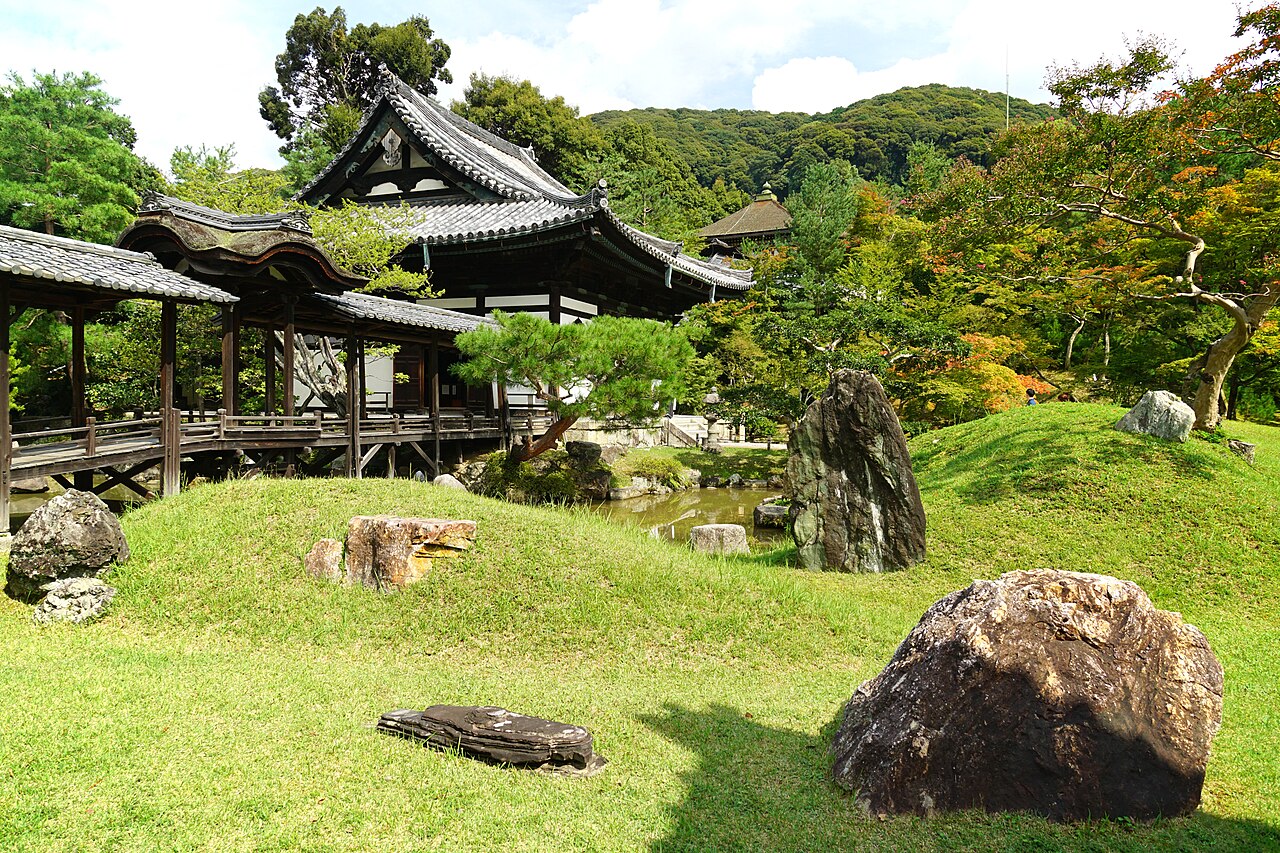
- The Covered Corridor Walk: Eikando’s multi-level wooden corridors — inspired by traditional shoin architecture — wind up the hillside and offer changing framed views of the maple canopy at every turn, ideal for deliberate, contemplative autumn maple leaves festival Japan photography.
- Tahōtō Pagoda Viewpoint: Climbing to the Tahōtō two-storey pagoda near the top of the temple grounds rewards visitors with a sweeping panoramic view across the entire autumn canopy and out toward the Kyoto cityscape — one of the finest panoramas in the entire city during kouyou season.
- Early Morning Garden Walk: For those who can visit at opening, the 9:00 AM hour offers a near-private encounter with the garden before the main crowds arrive. Morning light filtering through the maples is softer and warmer than the midday glare, and autumn mist sometimes clings to the pond surface for an ethereal, painterly effect.
Practical Tips for Visitors
Understanding the best time to visit Eikando autumn illumination 2026 can make or break your experience. Weekday mornings (9:00–11:00 AM) are the least congested option; weekends during peak kouyou (late November) see extremely long queues, sometimes stretching 30–60 minutes for entry. If crowds are a concern, consider weekday evenings spanning 6:00–8:00 PM — the later the hour, the thinner the visitor flow, and the illumination becomes more dramatic as darkness deepens.
For those asking about the cheapest time to visit Eikando illumination 2026, the early days of the event (around 15–19 November) and the final stretch (5–10 December) tend to see lighter crowds and, in some years, discounted combo tickets. Early November offers the fresh green-to-gold transition, and early December brings a more melancholic beauty as sparse, last-clinging leaves glow against bare branches — equally photogenic in a wabi-sabi sense.
What to wear: Kyoto in November and December can be genuinely cold, especially after dark. Layer up with a warm coat, scarf, and comfortable, slip-resistant walking shoes — the temple pathways include stone steps and uneven gravel. Gloves are recommended for evening sessions.
What to bring: A portable phone charger (your camera will be working overtime), a small flashlight or torch for navigating darker garden corners, and cash — many vendors and smaller temple counters do not accept cards. A compact tripod or gorilla pod is invaluable for the how to photograph autumn leaves Eikando challenge: low-light conditions at night demand a steady base for sharp, vivid images.
Photography tips: Use a wide aperture (f/1.8–f/2.8) and slow shutter speed to capture the luminous quality of illuminated leaves. Shoot in RAW format for maximum latitude in post-processing. The pond reflection shot performs best in the 20–30 minute window after the illumination switches on, before foot traffic disturbs the water surface. For vivid, saturated colours, a slightly underexposed daytime image often outperforms auto settings — bracket your exposures and review on-screen.
How to Get There
Eikando is straightforward to reach via Kyoto’s efficient public transport network. Here is a step-by-step how to get to Eikando temple Kyoto guide for international visitors:
- By City Bus: Kyoto City Bus routes 5 and 100 serve the area. Disembark at the Nanzenji-Eikandocho stop, then enjoy a gentle 3-minute walk eastward along the tree-lined lane to the temple gate. This is the most direct and tourist-friendly option.
- By Subway + Walk: Take the Kyoto Municipal Subway Tozai Line to Keage Station (T09). Exit via Exit 1, then follow the signed walking route along the Philosopher’s Path northward — a scenic 10-minute stroll through one of Kyoto’s most beloved pedestrian corridors.
- By Taxi: Readily available throughout central Kyoto. Show the driver the temple’s Japanese address (永観堂, Eikandocho 48, Sakyo-ku). Journey time varies; budget 15–25 minutes departing the central Kyoto Station area depending on traffic, which can be heavy during peak autumn season.
- On Foot via Philosopher’s Path: If you are already exploring Ginkakuji (Silver Pavilion) to the north, the Philosopher’s Path leads directly south to Eikando — a leisurely 20-minute walk along the canal-side path lined with cherry trees (and, in autumn, additional seasonal foliage).
For broader planning resources covering all of Kyoto’s autumn events, browse our Kyoto events guide for a full seasonal calendar, or explore our curated Japan travel articles for transport passes, accommodation tips, and regional itinerary ideas.
Nearby Attractions
Nanzenji Temple — A short 10-minute walk south off the Philosopher’s Path, Nanzenji is one of Kyoto’s great Zen temple complexes, famous for its dramatic sanmon gate, a Victorian-era red-brick aqueduct, and its own outstanding autumn foliage. The sub-temple Tenjuan boasts a celebrated karesansui (dry rock) garden framed by maples — a sublime complement to the Eikando experience. Entry fees are modest, and the grounds are expansive enough to absorb even large visitor numbers.
Ginkakuji (Silver Pavilion) — Heading north along the Philosopher’s Path leads to this iconic UNESCO World Heritage Site, another premier destination for at which to see fall foliage Kyoto Japan explorations. Ginkakuji’s moss garden, sand sculptures, and hilltop viewpoint are all spectacular during autumn. Combining Ginkakuji, the Philosopher’s Path walk, and Eikando in a single day makes for one of Kyoto’s finest autumn itineraries.
Heian Jingu Shrine & Okazaki Park — A 15-minute walk southwest, the vermillion torii gate of Heian Jingu rises above Okazaki’s cultural district, which also houses the Kyoto Municipal Museum of Art and the National Museum of Modern Art. The shrine’s extensive stroll garden displays beautiful autumn colours and offers a peaceful contrast to the intensity of the maple-viewing crowds at Eikando. This area also harbours several excellent Kyoto-style restaurants ideal for a post-illumination dinner.
Frequently Asked Questions
Q: What are the Eikando autumn color viewing hours in 2026, and do I need separate tickets for daytime and evening?
A: Yes, daytime and evening sessions at the Eikando autumn illumination Kyoto 2026 event require separate admission tickets. Daytime hours run approximately 9:00 AM to 5:00 PM (last entry 4:30 PM), while evening illumination hours operate out of around 5:30 PM to 9:00 PM (last entry 8:30 PM). If you purchase a daytime ticket and wish to stay for the illumination, you will need to exit and re-enter with a new evening ticket. Confirm exact pricing and hours via the temple’s official website (eikando.or.jp) closer to your visit date, as these details can shift slightly year to year.
Q: When is the absolute best time to see peak autumn colour at Eikando in 2026?
A: Based on historical patterns, the Eikando autumn foliage forecast 2026 suggests peak kouyou colour typically arrives spanning 20–30 November. However, leaf colour timing is influenced by temperature fluctuations — an unusually warm autumn can push peak colour through to early December, while a cold snap can accelerate it toward mid-November. Monitor real-time forecasts on Japan-Guide.com or the Japan Meteorological Corporation’s kouyou forecast (nihon-no-koyo.jp) as November approaches for the most accurate timing guidance.
Q: Is the Eikando maple leaves festival accessible for visitors using wheelchairs or with mobility challenges?
A: Eikando’s temple grounds include some areas that are not fully wheelchair accessible due to the hillside terrain, stone staircases, and traditional architectural features. The lower garden and pond area surrounding Hōjō Pond are relatively navigable, and much of the most celebrated autumn scenery is visible at ground level. However, reaching the upper Tahōtō Pagoda viewpoint requires climbing several flights of stairs. Visitors with mobility concerns are encouraged to contact the temple directly (075-761-0007) in advance to discuss access arrangements and identify the most suitable route.
Q: How far in advance should I plan my trip, and do I need to book tickets online?
A: Eikando does not currently operate an advance online ticket booking system — entry tickets are purchased at the gate on the day of your visit. However, given that peak autumn weekends see very heavy demand, you should plan your Kyoto accommodation well in advance — ideally by late spring or early summer 2026. Hotels in Kyoto fill rapidly during November kouyou season, and prices rise sharply. Consider staying in nearby Gion, Okazaki, or even Osaka (a 30-minute shinkansen ride away) if central Kyoto accommodation is unavailable at your preferred budget.
Q: Are there food and drink options available at Eikando during the autumn illumination event?
A: Light refreshments are sometimes available near the temple entrance during the festival period — look for seasonal drinks including warm amazake and hot tea. For a full meal, the streets surrounding Eikando and the nearby Nanzenji area offer excellent dining options. The restaurant district along Okazaki-dori and the lanes off the Philosopher’s Path serve everything out of traditional kaiseki course meals to casual soba noodle shops. Booking ahead at higher-end restaurants is strongly advised for November weekend evenings.
The Eikando autumn illumination Kyoto 2026 is one of those singular travel experiences that remains vivid in memory long after you have returned home — the kind of evening that reframes your understanding of what nature, art, and culture can achieve together. Whether you are a dedicated kouyou momiji viewing Kyoto enthusiast making an annual pilgrimage or a first-time visitor stepping through to Japan’s breathtaking autumn for the very first time, Eikando delivers a genuinely life-enriching encounter. Mark your calendar for 15 November through 10 December 2026, plan your visit wisely, and allow yourself the full sensory immersion this extraordinary matsuri deserves. For more inspiration across Japan’s festival calendar, explore our comprehensive guide to Japan festivals and dive deeper through to the full spectrum of Kyoto events awaiting you throughout the year.