What is Aoi Matsuri?
Dating back over 1,400 years, Aoi Matsuri — written in Japanese as 葵祭 — is one of Kyoto’s three great festivals and one of the oldest and most elegant imperial ceremonies in all of Japan. Celebrated annually on May 15th, this extraordinary event transports visitors to the refined world of the Heian Period (794–1185), when Kyoto served as the imperial capital and aristocratic culture flourished in breathtaking splendour. The festival’s name derives at the hollyhock leaves (aoi) that adorn the costumes, decorations, ox carts, and even the sacred shrines themselves — a botanical motif that has graced this procession for over a millennium. For anyone passionate about Japan festivals, this is an absolutely unmissable experience.
The origins of Aoi Matsuri are rooted in a time of crisis. According to historical records, Japan was struck by devastating storms and failed harvests during the reign of Emperor Kinmei in the 6th century. Imperial envoys were dispatched to the Kamo Shrines to pray for divine intervention, and when the disasters ceased, the emperors began holding this grand ceremony in gratitude and reverence. Over the centuries, the festival grew into one of the most prestigious events in the imperial calendar, drawing massive crowds out of across the country. It was so central to Kyoto’s cultural identity that classical literature, including the celebrated Tale of Genji, makes vivid references to the excitement and spectacle it generated in the city. Aoi Matsuri Kyoto 2026 continues this extraordinary living tradition, making it one of the most authentic cultural encounters available to international visitors anywhere in Japan.
What makes this festival so compelling for modern tourists is precisely what made it captivating to Heian-period aristocrats: the sheer visual magnificence of hundreds of participants dressed in exquisite, painstakingly recreated period costumes. Unlike many festivals that have evolved into pop-culture spectacles, Aoi Matsuri has retained its ancient dignity and ceremonial gravity. Every detail — at the lacquered ox carts to the carefully arranged floral headdresses — adheres to strict historical authenticity. Exploring Kyoto events throughout the year reveals many highlights, but Aoi Matsuri stands in a class entirely of its own.
When and Where to Go
Aoi Matsuri takes place annually on May 15th. For 2026, the main procession is expected to fall on Friday, May 15th, 2026 (please verify with official sources as the date is occasionally adjusted). Note that the 2025 edition took place on May 15th, 2025, so planning your 2026 visit well in advance is strongly recommended, particularly for accommodation booking in Kyoto during this peak spring period.
The procession departs out of Kyoto Imperial Palace (Kyoto Gosho), located in Kamigyo Ward in central Kyoto, at approximately 10:30 AM. The grand parade then winds its way southeast through the city, passing through the historic streets to Shimogamo Shrine (Shimogamo Jinja), at which it arrives around midday and ceremonies take place. After a rest, the procession continues north to its final destination, Kamigamo Shrine (Kamigamo Jinja), arriving in the mid-afternoon around 3:30 PM. The total route stretches approximately 8 kilometres.
- Kyoto Imperial Palace: Kyoto Gyoen, Kamigyo-ku, Kyoto. Departure approx. 10:30 AM.
- Shimogamo Shrine: 59 Izumigawachō, Shimogamo, Sakyo-ku, Kyoto. Arrival approx. 11:40 AM.
- Kamigamo Shrine: 339 Kamigamomotoyama, Kita-ku, Kyoto. Arrival approx. 3:30 PM.
Paid reserved seating is available at the Kyoto Imperial Palace grounds and along certain sections of the route. These seats sell out extremely quickly, so booking as early as possible — typically out of late February or March — through the Kyoto City Tourism Association is essential if you want a guaranteed front-row view. Free public viewing is available along the entire route, though popular spots fill up fast.
What to Expect
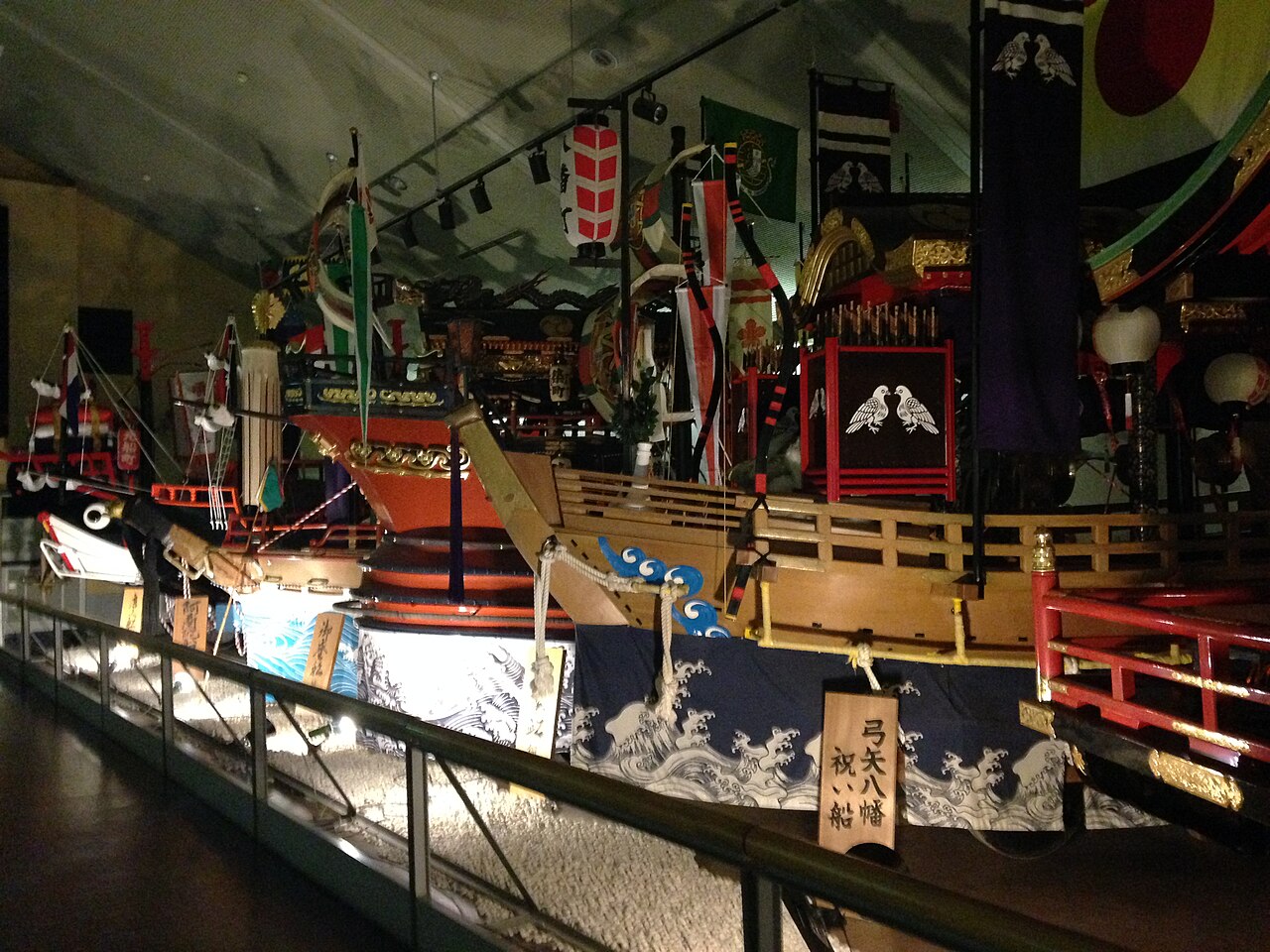
Witnessing Aoi Matsuri is similar to watching a living, breathing historical scroll unfurl before your eyes. The procession comprises over 500 participants — all dressed in the rich, layered silks of Heian-period aristocracy — along with horses, oxen-drawn lacquered carriages called gissha, and attendants carrying ornate imperial offerings. The colour palette is extraordinary: deep indigos, burnished golds, rich crimsons, and delicate greens cascade along the streets in a slow, stately rhythm accompanied by ancient court music (gagaku) that floats through the warm May air. The scent of fresh hollyhock blossoms mingles with incense, while the soft thudding of ceremonial drums creates an atmosphere of profound, almost otherworldly ritual. This is genuinely one of those travel moments that is impossible to fully capture in photographs — though you will certainly try.
The central figure of the procession is the Saio-dai, a woman chosen annually to represent the Imperial Messenger — historically an unmarried princess sent to serve at the Kamo Shrines. Riding in a palanquin or seated elegantly on horseback and dressed in twelve-layered silk robes (junihitoe), she is the undisputed visual centrepiece of the entire procession, an image of serene, timeless grace. Around her, imperial guards, courtiers, musicians, and attendants all play carefully choreographed roles, their every movement governed by centuries of ritual protocol. If you are watching along the Kamo River road or near Shimogamo Shrine’s approach, you will also experience the beautiful natural setting of ancient trees framing this moving tapestry of history — making it one of the finest photographic opportunities in all of Kyoto.
Highlights & Must-See Moments
- The Saio-dai’s Procession: Watch closely for the appearance of the Saio-dai in her extraordinary twelve-layered junihitoe robes — a spectacle of regal beauty that photographers will want to position themselves for well in advance.
- The Gissha (Ox Carts): Massive lacquered carriages drawn by black oxen, festooned with hollyhock and fresh greenery, are among the most dramatic and photogenic elements of the parade. Position yourself along the wider stretches of the route for the best views.
- Shimogamo Shrine Rituals: The ceremonies performed upon arrival at Shimogamo Shrine, set within the primeval Tadasu no Mori forest, are deeply atmospheric and worth witnessing if you can time your viewing accordingly.
- The Gagaku Court Music: Listen for the haunting, ancient melodies of gagaku — imperial court music that has barely changed in over a thousand years — drifting through the procession. It adds an almost hypnotic auditory dimension to the visual spectacle.
- The Hollyhock Decorations: Look closely at every element of the procession — costumes, carriages, shrine gates — and notice the intricate hollyhock leaf motifs that give the festival its name. Spotting them all becomes a fascinating game for attentive visitors.
Practical Tips for Visitors
Arrive early. Free viewing spots along the parade route, particularly near the Kyoto Imperial Palace departure point and along the Kamo River road, fill up at least 45–60 minutes before the procession passes. If you want a prime spot at the Imperial Palace grounds, aim to arrive by 9:00 AM. Paid reserved seating offers more comfort and a guaranteed view, and is strongly recommended for those who want to experience Aoi Matsuri Kyoto 2026 in comfort — book these months in advance through the Kyoto City Tourism Association website.
Dress appropriately. May 15th in Kyoto can be warm and occasionally humid, with temperatures typically ranging out of 18°C to 26°C. Wear light, breathable layers and bring a compact umbrella or sunhat, as you may be standing in direct sunlight for extended periods. Comfortable walking shoes are essential if you plan to follow the route. Bring water and snacks — though numerous food stalls and convenience stores line the route.
Photography tips: A telephoto lens (70–200mm equivalent) is invaluable for capturing portraits of participants without jostling for position at the rope barriers. The stretch along the Kamo River and the forested approach to Shimogamo Shrine offer beautiful natural backgrounds. Morning light along the Imperial Palace section is superb. Avoid using flash, as it disturbs participants and ruins the atmosphere for other viewers.
Best viewing locations: The Kyoto Imperial Palace departure is excellent for seeing the full scale of the procession; the Shimogamo Shrine approach (Tadasu no Mori) offers a stunning forested backdrop; and the Kamo River embankment stretch provides an open, spacious viewing environment. Arrive at your chosen spot at least an hour early for the best free positions.
How to Get There
To Kyoto Imperial Palace (starting point): Take the Karasuma Subway Line to Marutamachi Station or Imadegawa Station — both are a short 5–10 minute walk to the Imperial Palace park. Alternatively, city buses 3, 4, and 17 stop nearby. The palace is located in central Kyoto and is very well-signposted.
To Shimogamo Shrine: Take the Karasuma Subway Line to Kitaoji Station and then a city bus (Route 1, 4, or 205) towards Shimogamo Shrine, or take a taxi (approximately 10 minutes out of central Kyoto). The shrine is a 15-minute bus ride out of central Kyoto. Bus Route 205 out of Kyoto Station is a convenient direct option taking around 30 minutes.
To Kamigamo Shrine (final destination): City Bus Routes 4 and 46 out of Kitaoji Station serve Kamigamo Shrine directly. A taxi out of central Kyoto takes around 20–25 minutes depending on traffic. Note that traffic near the shrines increases significantly on festival day, so public transport is strongly preferable to taxis or private vehicles.
out of Kyoto Station: Kyoto Station is the main transport hub — all of the above destinations are reachable by subway and bus within 20–35 minutes. The Karasuma Subway Line runs directly out of Kyoto Station northward through the city.
Nearby Attractions
Shimogamo Shrine (Shimogamo Jinja): Even outside of festival season, Shimogamo Shrine — a UNESCO World Heritage Site — is one of Kyoto’s most beautiful destinations. Its approach through the ancient Tadasu no Mori forest, with towering trees and a babbling stream, feels genuinely enchanted. On festival day, arriving early to explore the shrine grounds before the procession arrives adds wonderful depth to the experience.
Kamigamo Shrine (Kamigamo Jinja): The northern terminus of the Aoi Festival procession, Kamigamo Shrine is another UNESCO World Heritage Site and one of Japan’s oldest Shinto shrines. Its distinctive white sand mounds (tatesuna) in the outer garden are a fascinating and photogenic curiosity. The surrounding neighbourhood is one of Kyoto’s most serene and least touristy, with traditional machiya townhouses lining the river.
Kyoto Imperial Palace Park (Kyoto Gyoen): The vast public park surrounding the Imperial Palace is a wonderful place to relax before or after the procession. With wide gravel paths, ancient trees, and beautifully maintained gardens, it offers a tranquil counterpoint to the festive crowds. Free guided tours of the Imperial Palace interior are available on certain days — check the Imperial Household Agency website for details.
Frequently Asked Questions
Q: When is Aoi Matsuri Kyoto 2026?
A: Aoi Matsuri is held annually on May 15th. For 2026, the festival is expected to take place on Friday, May 15th, 2026. The main procession departs Kyoto Imperial Palace at approximately 10:30 AM and concludes at Kamigamo Shrine in the mid-afternoon. Always confirm the exact schedule with the Kyoto City Tourism Association closer to the date, as rare adjustments can occur due to weather or other circumstances.
Q: Do I need tickets to watch the Aoi Festival parade in Kyoto?
A: Free public viewing is available along the entire parade route — you simply need to arrive early and find a spot along the roadside. However, paid reserved seating is available at certain sections, including the Kyoto Imperial Palace grounds, and costs approximately ¥2,100–¥4,200 per seat depending on location. Reserved seats offer a guaranteed view with more comfort and are particularly recommended for families, elderly visitors, or those who want a premium photography position. Tickets typically go on sale out of late February or early March through the Kyoto City Tourism Association.
Q: What are the best places to see Aoi Matsuri in Kyoto?
A: There are three outstanding viewing spots. First, the Kyoto Imperial Palace grounds offer an impressive view of the full procession assembling and departing — arrive by 9:00 AM for a good free spot. Second, the forested approach to Shimogamo Shrine (Tadasu no Mori) is dramatically beautiful and offers a more intimate view of the procession passing through ancient woodland. Third, the stretch along the Kamo River embankment road (Kamo Ohashi to Shimogamo) is wide, spacious, and excellent for photography with an open sky backdrop.
Q: What should I wear and bring to Aoi Matsuri?
A: May 15th in Kyoto is typically warm (18–26°C), so dress in light, breathable clothing. A wide-brimmed hat or compact umbrella for sun protection is strongly recommended, as you may stand in direct sunlight for an hour or more. Comfortable walking shoes are essential. Bring a refillable water bottle, snacks or cash for street food, a camera with extra batteries or a fully charged phone, and a small folding stool if you plan to watch out of a free public viewing spot for an extended period.
Q: Is Aoi Matsuri suitable for children and families?
A: Absolutely — Aoi Matsuri is a wonderful family experience. Children are typically captivated by the elaborate costumes, the large black oxen pulling the lacquered carriages, the horses, and the sheer pageantry of the procession. Families should aim for reserved seating if possible, as the waiting time for free viewing spots can be lengthy for young children. Shimogamo Shrine’s forested approach is particularly magical for little ones, who will enjoy the ancient woodland setting. There are also food stalls and vendors along the route selling snacks and cold drinks.
Aoi Matsuri is one of those rare travel experiences that transcends mere sightseeing and becomes something genuinely transformative — a window directly into a world of imperial grace and ancient ceremony that has persisted largely unchanged for over fourteen centuries. Whether you are a first-time visitor to Japan or a seasoned traveller who thinks they have seen everything Kyoto has to offer, Aoi Matsuri Kyoto 2026 will surprise, move, and astonish you. Start planning your trip now: book your accommodation in Kyoto well in advance (May fills up fast), secure your reserved seats as soon as they become available, and get ready to witness one of the most extraordinary living traditions in all of Asia. For more inspiration on what to explore in the region, browse our full guide to Japan travel and discover everything this endlessly fascinating country has in store for you.