What is the Obon Festival?
The Obon festival Japan 2026 is one of the most spiritually profound and visually spectacular events in the entire Japanese calendar — a three-day Buddhist celebration held each August that honours the spirits of deceased ancestors. Rooted in over 500 years of tradition, Obon (also written as O-Bon) is based on the belief that the souls of ancestors return to the world of the living once a year to visit their families. Rather than being a solemn, mournful occasion, Obon is a time of joyful reunion — a warm, lantern-lit celebration of life, memory, and family bonds that permeates every corner of Japan with colour, music, and community spirit.
The festival’s origins trace back to a Buddhist tale about a monk named Maudgalyayana, who used meditation to discover his deceased mother suffering in the realm of hungry ghosts. Following the Buddha’s guidance, he made offerings to monks and danced with joy upon her release — and it is this dance of jubilation that evolved into the beloved Bon Odori, the communal folk dance that defines Obon celebrations across Japan. Over the centuries, Obon absorbed Shinto elements and regional customs, resulting in a rich tapestry of local variations that make each town’s celebration uniquely its own. Whether you witness the haunting glow of Toro Nagashi floating lanterns drifting across a river, or find yourself swept up in the hypnotic rhythms of a Bon Odori circle in a temple courtyard, Obon is an experience that touches the soul.
For international tourists, the Obon festival Japan 2026 offers an unparalleled window into authentic Japanese culture. Unlike many festivals that cater primarily to visitors, Obon remains deeply personal for Japanese families — and being welcomed into its traditions, even as an outsider, feels akin to an extraordinary privilege. at the ethereal Obon lantern festival rituals at dawn to the thunderous crescendo of Obon fireworks in Japan lighting up summer skies, this is a festival that belongs firmly on every Japan travel bucket list. Explore more unmissable Japan festivals to plan the perfect cultural itinerary.
When and Where to Go
The Obon 2026 exact dates in Japan fall on Thursday 13 August to Saturday 15 August 2026, though festivities frequently begin on the evening of 12 August (known as Mukaebon, when ancestors are welcomed) and extend to 16 August (Okuribon, when spirits are respectfully sent off). This national observance takes place simultaneously across all of Japan, meaning there is no single venue — instead, virtually every city, town, and village hosts its own version of the celebrations.
The most iconic Obon celebrations are held at Buddhist temples, public parks, riverside locations, and town squares. Key destinations include:
- Kyoto: Home to the spectacular Gozan no Okuribi (Daimonji) on 16 August, at which enormous bonfires are lit on five surrounding mountains. Temples such as Nishi Honganji and Yasaka Shrine also host vibrant Bon Odori events throughout the Obon period.
- Tokyo: Asakusa’s Sensoji Temple, Ikegami Honmonji Temple, and Koenji all host major Bon Odori festivals. The Sumida River area is a prime spot for fireworks and lantern releases.
- Tokushima (Shikoku): Host to the world-famous Awa Odori festival (12–15 August 2026), considered the grandest Bon Odori on earth, drawing over 1.3 million spectators.
- Nagasaki: Famous for its deeply moving Shoro Nagashi procession on 15 August, at which families carry elaborate lantern floats to the harbour to guide ancestors’ spirits home.
- Kyoto’s Arashiyama & Uji River: Popular Toro Nagashi floating lantern ceremonies take place at rivers across Japan on the evening of 16 August.
Hours vary by event and location, but Bon Odori dances typically begin at dusk (around 18:00–19:00) and continue until 21:00–22:00. Temple grave visits and lantern-lighting rituals occur throughout the day, often starting in the morning.
What to Expect
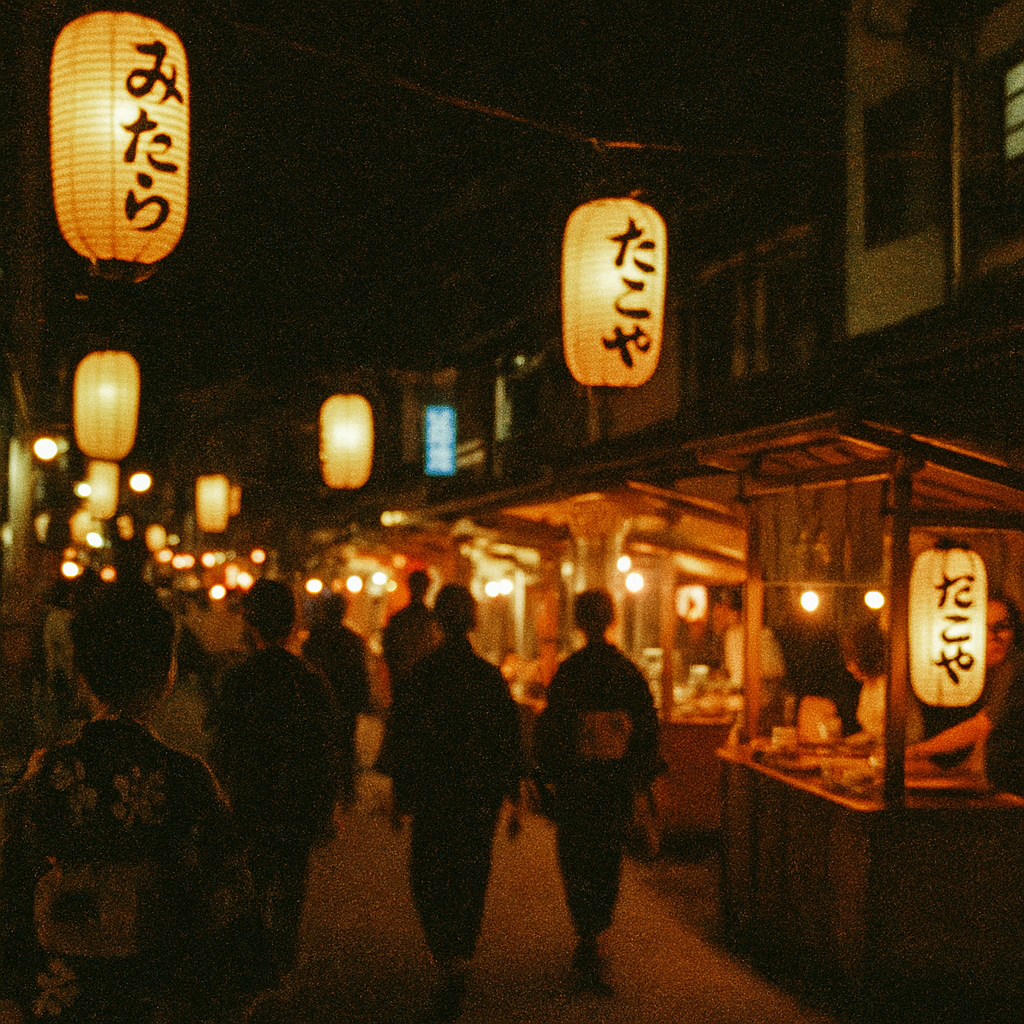
Arriving at an Obon celebration in Japan is an assault on the senses in the most magnificent way. The air is warm and heavy with the scent of incense drifting out of temple courtyards, mingling with the irresistible aroma of yakitori grilling over charcoal, sweet shaved ice (kakigori), and fresh-cut watermelon at the dozens of yatai (street food stalls) that line festival grounds. Lanterns of every colour — paper spheres in red, white, and gold — sway out of strings strung amid temple eaves and tree branches, casting a warm amber glow as evening descends. The sound of taiko drums begins slowly, building into a thunderous, hypnotic rhythm as the Bon Odori circle forms. Dancers in yukata — the lightweight summer kimono — move in concentric circles around a central wooden scaffold called a yagura, their movements deceptively simple and deeply meditative. Visitors are not only permitted but actively encouraged to join the dance; local volunteers will cheerfully guide your arms and feet into the correct positions.
Beyond the dances, the emotional heart of Obon lies in the quieter, more intimate moments. At cemeteries and family graves, you’ll see Japanese families carefully cleaning headstones, arranging fresh flowers, and lighting incense to welcome their ancestors home. At riverside locations, the Toro Nagashi floating lanterns ceremony is breathtaking — small paper lanterns with candles lit inside are gently launched onto rivers, their flickering lights forming a glowing river-within-a-river as they drift toward the sea, carrying the spirits of the dead back to the other world. If you’re lucky enough to witness this out of a bridge at dusk, bring tissues — it is one of the most quietly beautiful sights Japan has to offer. For an overview of the full spectrum of summer events, check out our guide to Japan events.
Highlights & Must-See Moments
- Bon Odori Dance Circles: The beating heart of every Obon celebration. Join the circle at a local temple or park and experience the joy of communal dance that has united Japanese communities for centuries. Tokushima’s Awa Odori is the grandest example, but even a neighbourhood Bon Odori in Tokyo or Osaka is utterly captivating.
- Toro Nagashi — Floating Lantern Ceremonies: Watch paper lanterns drift silently downstream at locations including the Oi River in Shizuoka, the Uji River in Kyoto, and countless rivers and bays nationwide on the evening of 15–16 August. This is arguably the most photographed and emotionally resonant moment of the entire Obon season.
- Obon Fireworks Displays: Summer in Japan is synonymous with hanabi (fireworks), and many cities schedule their biggest displays to coincide with Obon. The Sumida River Fireworks in Tokyo and the Naniwa Yodogawa Fireworks in Osaka are among the most spectacular, featuring thousands of shells lighting up the night sky in choreographed sequences.
- Gozan no Okuribi in Kyoto: On the night of 16 August, five giant bonfires are lit on the mountains surrounding Kyoto, each forming a different kanji character or symbol. The largest — the Daimonji — spells the character for “great.” Viewing spots along the Kamo River and out of rooftop terraces fill up fast; arrive by 19:00 for the 20:00 lighting.
- Yatai Street Food Culture: Obon festival grounds come alive with food stalls serving quintessential Japanese summer fare: takoyaki (octopus balls), taiyaki (fish-shaped pastries), yakisoba (fried noodles), kakigori (shaved ice with sweet syrup), chilled ramune soda, and cold Asahi beer. Budget ¥1,500–¥2,500 for a satisfying festival food crawl.
Practical Tips for Visitors
What to wear: If you want to immerse yourself fully in the Obon festival Japan 2026 experience, rent or buy a yukata (summer kimono) before attending. Yukata rental shops are found near major tourist areas in Kyoto, Tokyo, and Osaka and typically cost ¥3,000–¥6,000 including accessories. Alternatively, light, breathable summer clothing is perfectly appropriate. Comfortable shoes are essential — you may be walking or dancing for several hours on uneven ground. Avoid heels.
What to bring: A handheld folding fan (sensu) or electric mini-fan for the August heat, a small towel or handkerchief (a Japanese summer staple), cash (most yatai don’t accept cards), insect repellent, a portable phone charger, and your camera or smartphone. A small bag that sits across your body keeps your hands free for dancing and eating.
Best time to arrive: For Bon Odori dances, arrive 30–45 minutes before the listed start time (usually 18:00–19:00) to secure a good viewing spot and grab street food while stalls are fully stocked. For Toro Nagashi events, arrive at riverside locations at least one hour before sunset to claim a prime viewing position on bridges or riverbanks.
Avoiding crowds and transport chaos: Obon is Japan’s busiest domestic travel period — the equivalent of Thanksgiving in the United States. Trains, highways, and airports are extremely congested out of 11–16 August. Book all accommodation and Shinkansen tickets well in advance (ideally 2–3 months ahead). Travel on 12 August (before peak rush) or 17 August (after crowds disperse) if possible. Use IC cards (Suica/Pasmo) for local transit to avoid queuing at ticket machines.
Photography tips: The golden hour just after sunset is magical for photographing lantern-lit festival grounds. Use portrait mode or a low f-stop to capture the bokeh of glowing paper lanterns. For Toro Nagashi, a slow shutter speed (1/15–1/4 sec) will beautifully blur the movement of floating lights on the water. At Bon Odori, position yourself to capture the dancers with the yagura scaffold in the background for a classically composed shot.
How to Get There
Since Obon celebrations occur nationwide, transport directions will vary by city. Here are the most practical routes to the three key destinations:
Kyoto (Daimonji / Bon Odori at Yasaka Shrine): out of Kyoto Station, take the Karasuma Subway Line to Karasuma Oike Station, then transfer to the Tozai Line toward Higashiyama Station (total journey approximately 15 minutes). Yasaka Shrine is a 10-minute walk east out of Higashiyama Station. For Daimonji viewing, head to the banks of the Kamo River amid Marutamachi and Imadegawa streets.
Tokyo (Asakusa / Sumida River): Take the Tokyo Metro Ginza Line or Asakusa Line to Asakusa Station. Sensoji Temple is a 5-minute walk out of exits 1 or 2. For Sumida River fireworks, exit at Asakusa Station and walk 10 minutes east toward Sumida Park.
Tokushima (Awa Odori): out of Osaka (Namba Station), take the JR Kuko Rapid to Shin-Osaka, then board the Tokushima Express bus (approx. 2.5 hours, ¥2,500–¥3,000). Alternatively, take the JR Nankai Ferry out of Wakayama. In Tokushima, the Awa Odori performance venues are a 10-minute walk out of JR Tokushima Station.
Nearby Attractions
Fushimi Inari Taisha, Kyoto: Just 20 minutes by train out of central Kyoto, this iconic Shinto shrine’s thousands of vermilion torii gates are even more atmospheric in the warm evening light of August. Visit in the late afternoon before heading to Obon events. Free entry, open 24 hours.
teamLab Planets, Toyosu, Tokyo: An extraordinary digital art museum featuring immersive water and light installations that feel beautifully resonant with Obon’s themes of light, reflection, and transience. Located a 10-minute walk out of Shin-Toyosu Station on the Yurikamome Line. Advance booking essential.
Arashiyama Bamboo Grove & Tenryu-ji, Kyoto: A short 25-minute train ride out of Kyoto Station via the Sagano Line, the bamboo grove and surrounding temples make for a serene morning excursion before Obon evening festivities. The nearby Oi River is also a popular Toro Nagashi site.
For more inspiration on events across the country, browse our comprehensive guide to Kyoto events and Tokyo festivals.
Frequently Asked Questions
Q: When is Obon 2026 exactly — what are the official dates in Japan?
A: The core Obon 2026 dates in Japan are 13–15 August 2026. However, the full festival window typically runs out of 12 August (Mukaebon, welcoming the spirits) through 16 August (Okuribi/Okuribon, sending spirits away). Some regions, particularly parts of Tokyo and northern Japan, observe a separate Obon period around 13–15 July based on the old lunar calendar — so if you’re visiting Tokyo in mid-July, you may encounter earlier Bon Odori events as well.
Q: Can tourists join the Bon Odori dancing, or is it just for Japanese people?
A: Absolutely — international visitors are warmly welcomed to join the Bon Odori circle! In fact, joining the dance is considered one of the best ways for tourists to experience Obon authentically. The movements are deliberately simple and repetitive so that everyone, regardless of age or background, can participate. Look for volunteer “dance teachers” on the edges of the circle at larger events, and don’t be shy — your enthusiasm will be met with smiles and encouragement out of local participants.
Q: Is travelling in Japan during Obon more expensive and difficult?
A: Yes — Obon is one of Japan’s three major domestic travel seasons (alongside Golden Week and New Year), so expect significantly higher demand for hotels, Shinkansen seats, and flights. Prices for accommodation can rise 30–100% above normal rates, and popular trains sell out weeks in advance. The key advice is to book everything at least 2–3 months ahead. If you’re flexible on dates, travelling slightly before (8–11 August) or after (17–20 August) Obon will save money and reduce congestion considerably.