
Shoyryo Nagashi 2026: Nagasaki's Illuminated Spirits Festival
Kyushu-Okinawa · NagasakiCultural
On the evening of 15 August, Nagasaki sends its recently deceased on their way with hand-built boats, bells and an unrelenting wall of firecracker smoke.
Overview
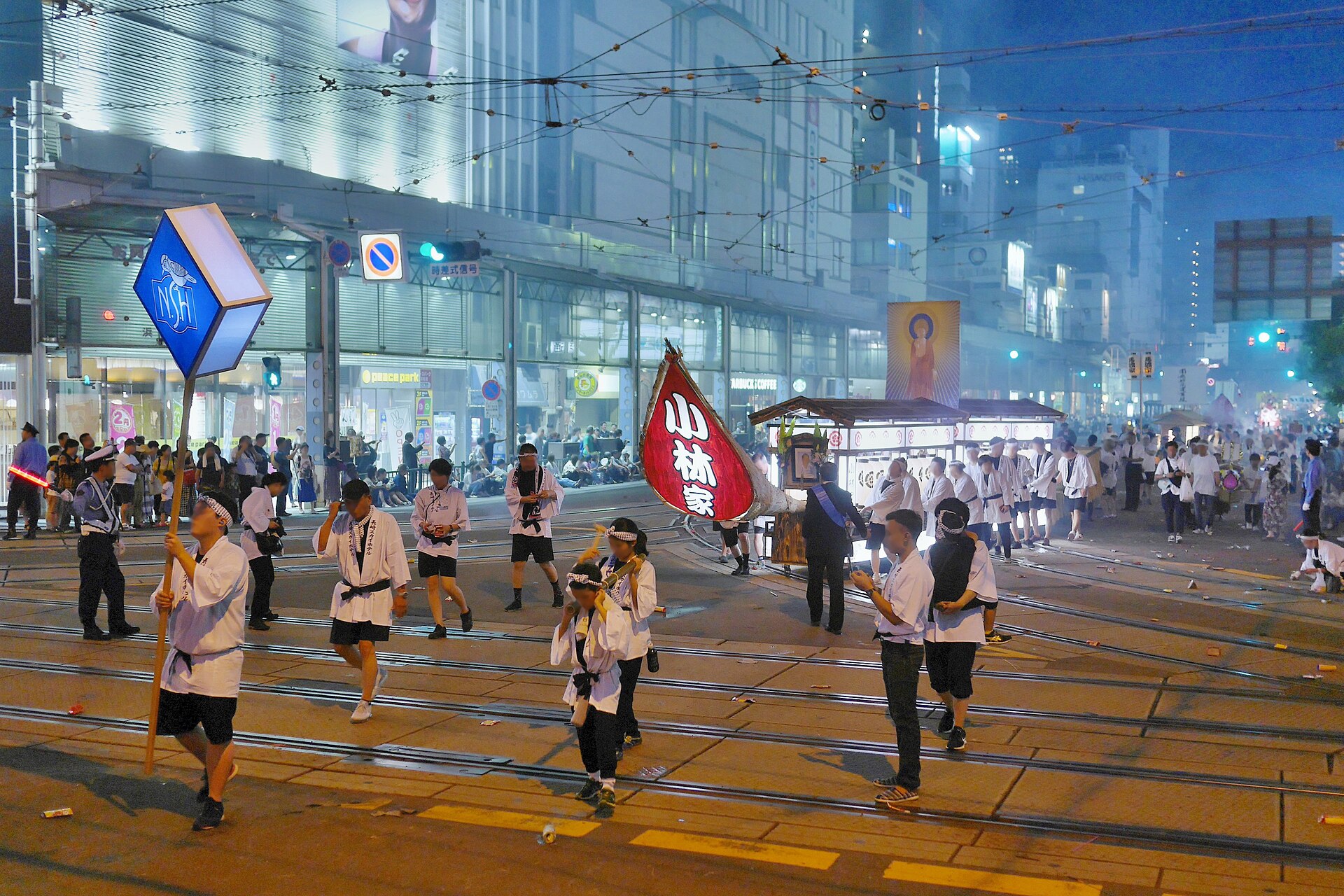
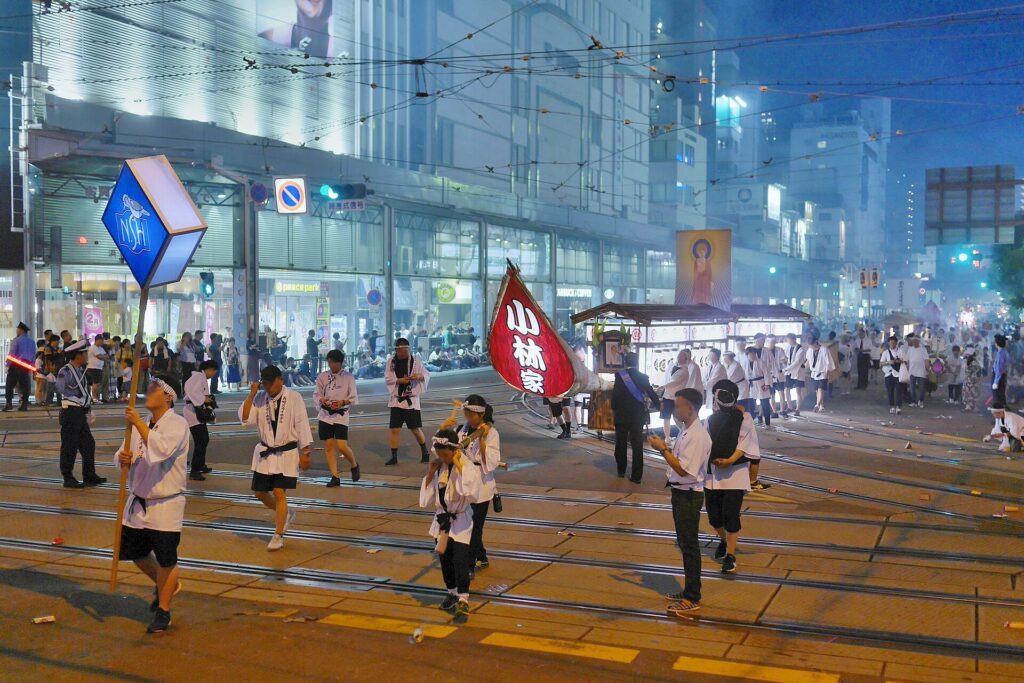
Shoro Nagashi is not a festival in the celebratory sense. Families who have lost a relative in the year since the last Obon build a shorobune, a spirit boat, and haul it through the streets of central Nagasaki on 15 August to see the soul on its way.
The scale is what surprises visitors. The boats can be small enough for two people to carry or large enough to need a whole neighbourhood, and the procession moves through a continuous barrage of firecrackers — a custom borrowed from Chinese grave rites and understood locally as warding off evil. It is loud, smoky, and emotionally direct in a way few public events in Japan are.
What to Expect
The boats are homemade from bamboo, boards and straw. A long prow projects forward carrying the family crest, the family name, or the name of the neighbourhood in large characters, and decorations often reflect what the person who died liked: a favourite team, a hobby, a trade. Half-finished hulls start appearing on street corners in early August.
The procession moves to a bell rhythm that residents render as chan-kon chan-kon, punctuated by the call doi doi. The main route runs from Shianbashi through Kenchozaka to Ohato, ending at the disposal points where the boats are handed over.
An important nuance: Nagasaki City does not organise or authorise the event. It only sets up the nagashiba collection points, because it is responsible for disposing of the boats afterwards. Boats over two metres need a road-occupancy permit from the police, fireworks are banned inside the disposal areas, and floating boats out to sea is prohibited.
Getting There
From JR Nagasaki Station, the Nagasaki Electric Tramway reaches Ohato or Shianbashi in a few stops; both sit directly on the procession route and the whole central area is walkable. Wide road closures come into force from 17:00 until the procession finishes, so trams and walking are the only practical ways to move — buses are diverted. Disposal points accept boats from around 17:00 until about 21:00, with processions continuing well into the night.
Admission
Free to watch, with no reserved seating anywhere along the route. There is no ticketing body, no grandstand and no official viewing area.
Tips for Visitors
Bring ear protection. This is not a precaution for the sensitive — the firecrackers go off at street level within metres of spectators and are genuinely deafening for hours. Wear closed shoes and clothes you do not mind smelling of smoke, and expect the streets to be littered with spent casings. Above all, remember what you are watching: for the families pulling the boats this is a funeral rite, and photographing them at close range without asking is not welcome.
Access and Map
| Date | 15 August, every year without exception |
|---|---|
| Times | Boats set off around dusk; disposal points open roughly 17:00–21:00 |
| Venue | Central Nagasaki streets — main route Shianbashi → Kenchozaka → Ohato |
| Access | Shianbashi or Ohato tram stops; about 10 minutes by tram from JR Nagasaki Station |
| Admission | Free; road closures from 17:00 |
| Official site | travel nagasaki (Nagasaki City) |
Source: travel nagasaki — Nagasaki City official tourism site
Image: Photo: Houjyou-Minori / Wikimedia Commons, CC0

.png)