
Kanto · TochigiFestival
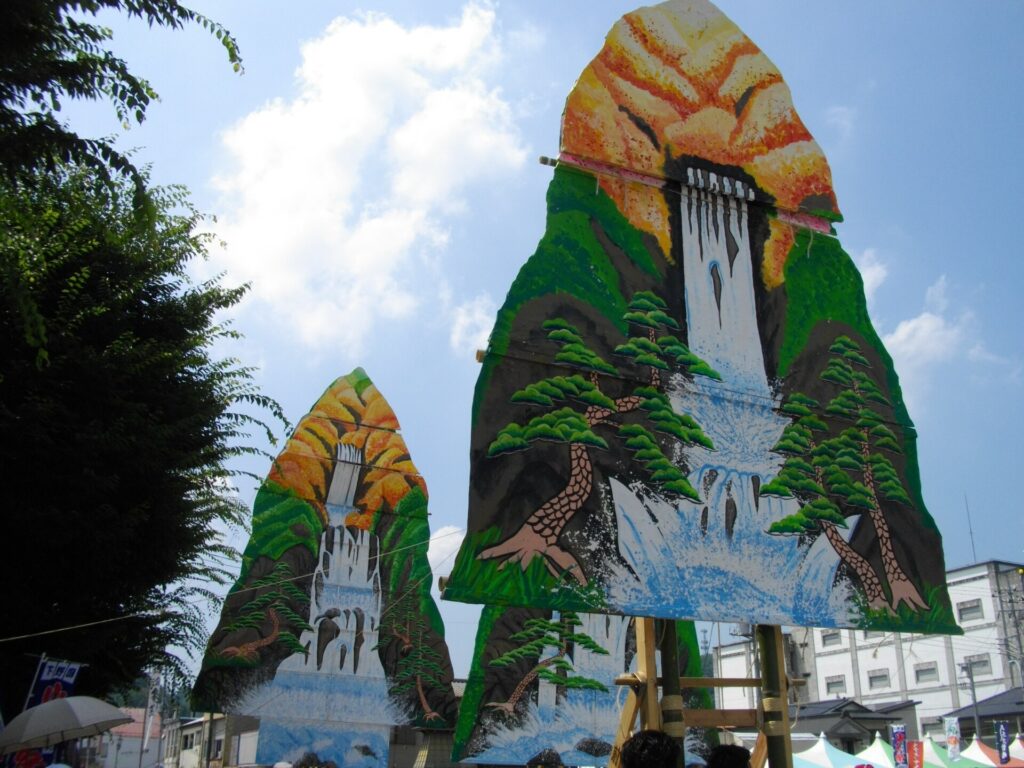
A paper stage ten metres tall is raised in the middle of a public road, a kabuki dance is performed on it, and then the whole thing is taken down and rebuilt somewhere else.
Overview
The Yamaage Festival (山あげ祭) of Nasukarasuyama is one of the most unusual street events in Japan. Over three days in July, crews build a temporary open-air kabuki stage in the road — complete with a painted mountain backdrop that gives the festival its name — perform on it, dismantle it, and repeat the process at a new location several times a day.
The backdrops, called harika-yama, are made from locally produced Karasuyama washi paper stretched over frames and painted with landscapes. Set up in sequence, they create a stage roughly 100 metres deep along the street.
UNESCO inscribed the ritual in December 2016 as part of the “Yama, Hoko, Yatai float festivals” listing, and it is also a nationally designated Important Intangible Folk Cultural Property.
When and Where
The 2026 edition ran from 24 to 26 July. The festival is always held on the Friday, Saturday and Sunday of the week containing the fourth Saturday of July; the 2027 edition is listed as 23–25 July.
There is no single venue. Performances move through the streets of central Nasukarasuyama, in Tochigi Prefecture, from morning until late evening. The city publishes the day-by-day performance schedule as a PDF on its official festival page shortly before the event.
What to Expect
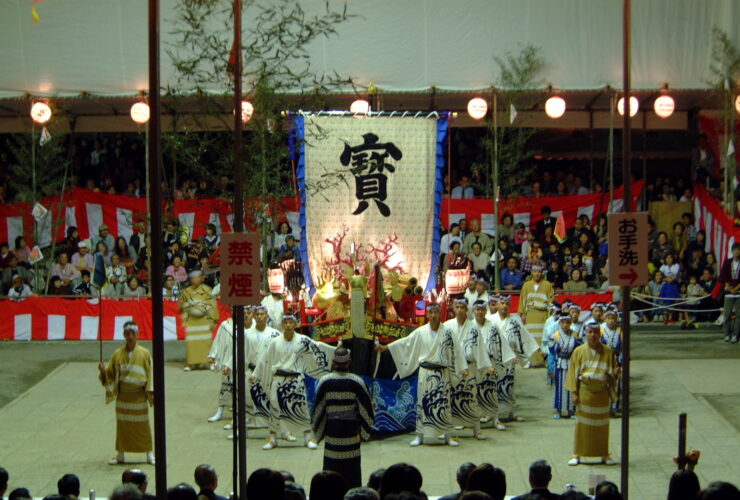
The build is as much of the spectacle as the performance itself. Roughly 150 young men are needed to move and re-erect the set, and the changeover happens in the open in front of the audience.
- The tradition dates from 1560, giving it more than 460 years of continuous history.
- Backdrops reach around 10 metres in height and are painted on Karasuyama washi paper.
- Dancers perform kabuki dance to Tokiwazu shamisen accompaniment.
- The kigashira, or crew leader, signals scene changes with wooden clappers.
- The repertoire includes “Masakado”, “Modoribashi” and “Hebihime-sama”.
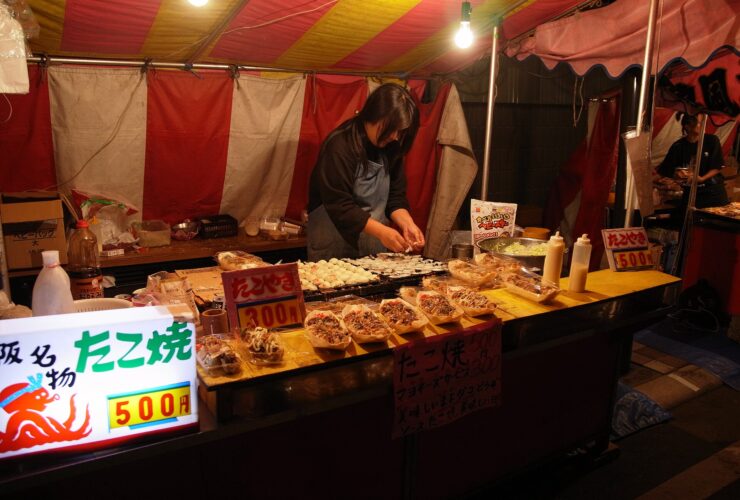
- Food stalls line the streets throughout the three days.
Tickets and Admission
Watching from the street is the normal way to see the festival. Reserved grandstand (sajiki) seats are sold at 1,000 yen per seat and include a festival fan and a novelty item.
Sajiki seats go on sale at the sajiki booth one hour before each performance and cannot be reserved in advance. There is no refund if a performance is cancelled by rain after it has started.
Tips for Visitors
- The JR Karasuyama Line does not accept Suica or other IC cards — buy a paper ticket before you board.
- Check the published schedule and pick two consecutive performance sites; walking between them lets you watch the stage being rebuilt.
- Evening performances are the most atmospheric, and JR East has run a special return train departing Karasuyama at 22:20 on festival nights.
- If driving, use the free temporary lots at Chuo Park, the city hall staff lot, JA Karasuyama, Karasuyama Elementary School or the Atagodai sports ground.
Access and Map
| Dates | 24–26 July 2026 (annually, Fri–Sun of the week containing the fourth Saturday of July) |
|---|---|
| Venue | Streets of central Nasukarasuyama — multiple stage locations through the day |
| Access | JR Karasuyama Line to Karasuyama Station, then 5–30 minutes on foot depending on the performance site |
| By car | About 50 minutes from Utsunomiya IC or Utsunomiya-Kaminokawa IC; about 60 minutes from Naka IC. Free temporary parking provided |
| Admission | Free to watch from the street; reserved sajiki seats 1,000 yen, sold on the day |
| Official site | city.nasukarasuyama.lg.jp |
Source: Nasukarasuyama City official Yamaage Matsuri site
Image: Photo: Abasaa / Wikimedia Commons, Public domain

.png)