
Kansai · OsakaFestival
Teams of hundreds sprint multi-tonne wooden floats around street corners without slowing down — Kishiwada’s danjiri festival returns on 19 and 20 September 2026.
Overview
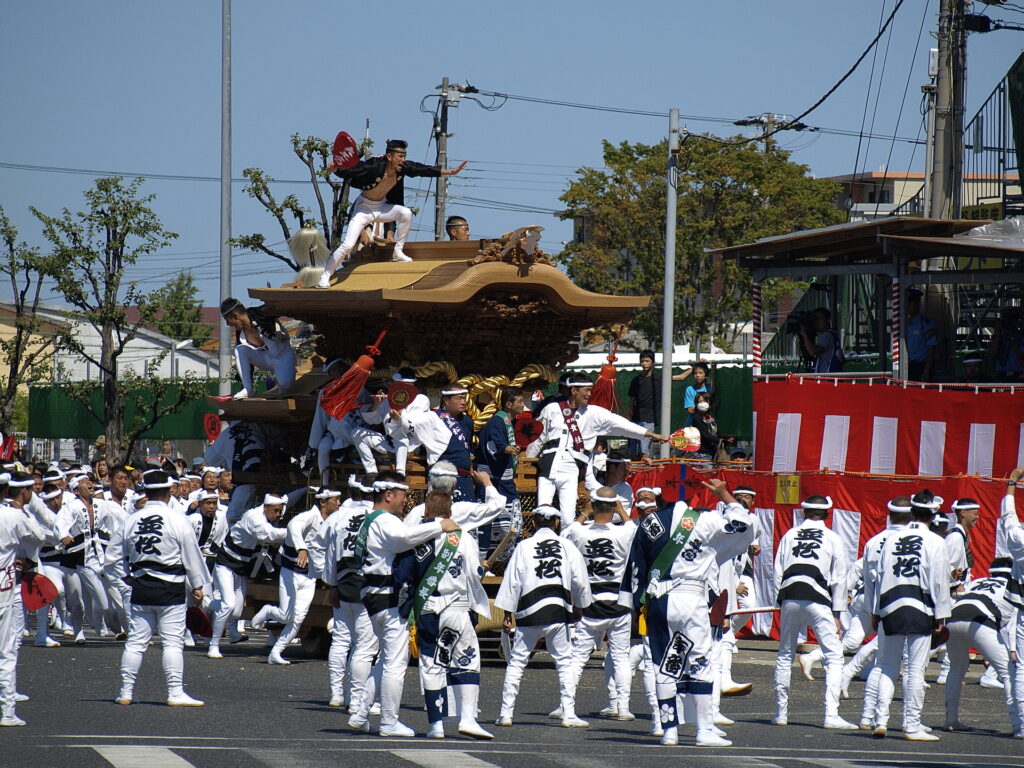
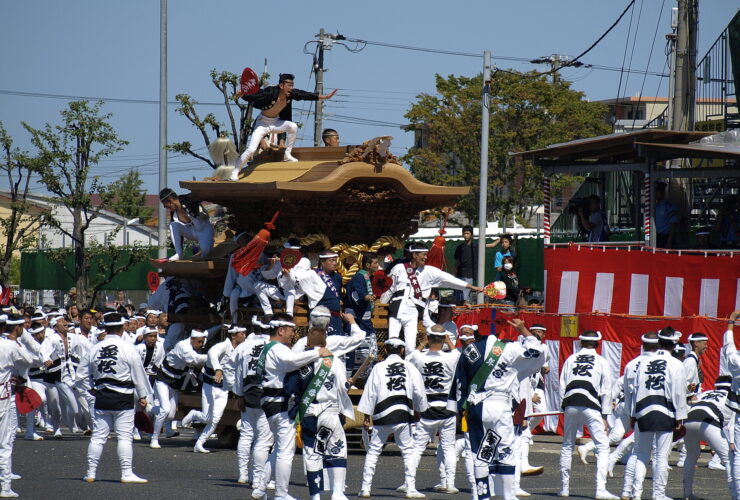
Kishiwada Danjiri Matsuri (岸和田だんじり祭) is the most physically alarming festival in the Kansai calendar. Kishiwada City traces it to the mid-Edo period, when the local lord held an Inari festival to pray for a good harvest — more than three centuries of continuity. Each neighbourhood owns its own danjiri, a wooden float covered in narrative relief carvings, and each has its own pulling team.
What draws the crowds is yarimawashi: turning a running float around a ninety-degree street corner at full speed. It goes wrong often enough that the tension is real, and it is the reason the corners fill up hours in advance.
When and Where
Dates: 19 September 2026 (yoimiya, eve) and 20 September 2026 (hongu, main day).
Hours: 19 Sep 06:00–22:00; 20 Sep 09:00–22:00.
Trial pulls: 6 September and 18 September, 14:00–16:00.
Venue: the streets of the Kishiwada and Haruki districts, Kishiwada City, Osaka. The best-known viewing corner is Kankanba.
Note that Kishiwada also runs a separate October festival in other districts of the city — 10 and 11 October 2026. It is a different event with different neighbourhoods.
Getting There
Take the Nankai Main Line from Namba to Kishiwada Station; an express takes roughly 20 to 30 minutes. Kankanba is about ten minutes on foot from the station. For the Haruki district, get off at Haruki Station instead and walk about twelve minutes to Yasaka Shrine.
Extensive road closures apply on both days. Kishiwada City publishes an annual traffic-restriction notice and illustrated route maps — check them before you pick a spot, because some streets become one-way pedestrian flow only.
What to Expect
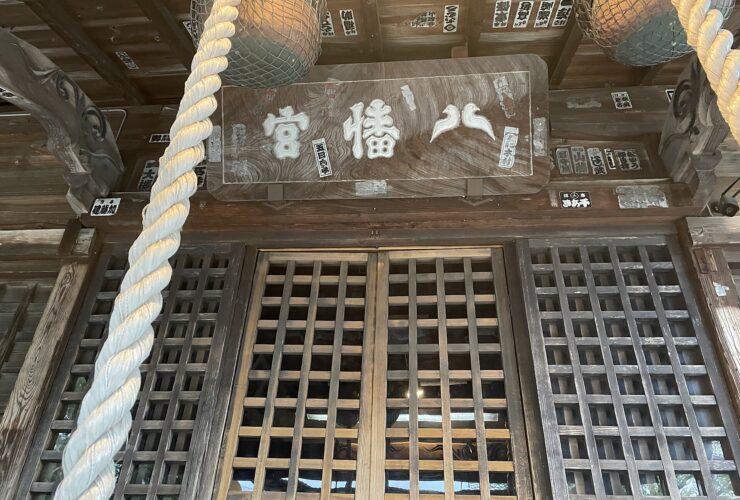
The floats are pulled to their tutelary shrines for miyairi; the September festival covers four shrine groupings — Kishiki Shrine, Kishiwada Tenjingu and Yasaka Shrine in the Kishiwada district, plus Yasaka Shrine in Haruki.
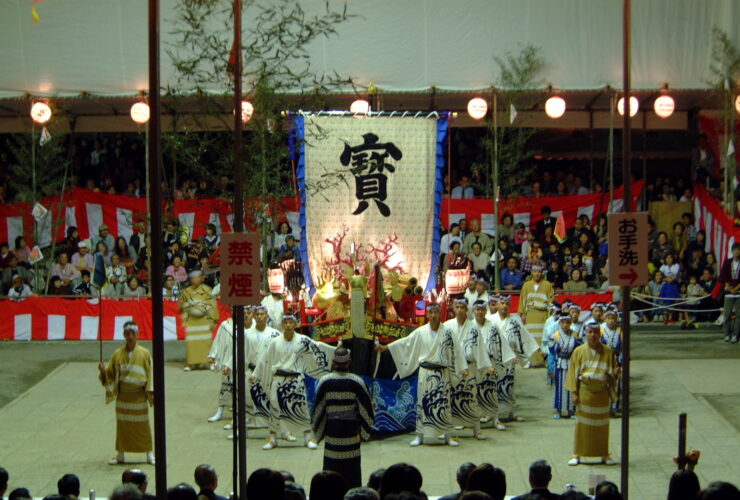
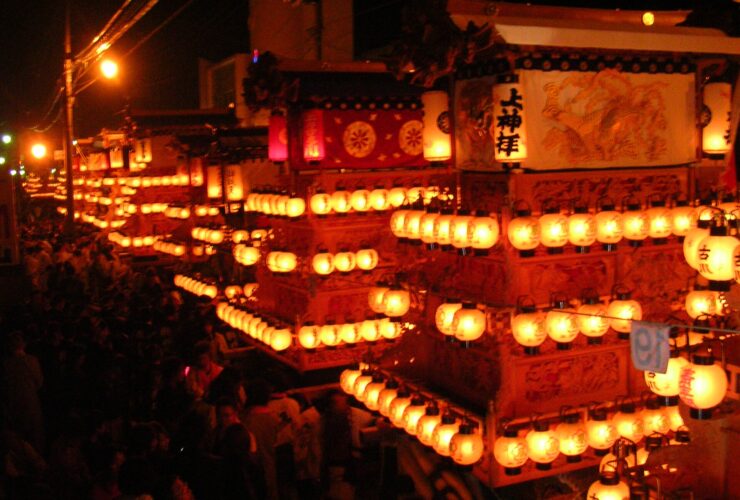
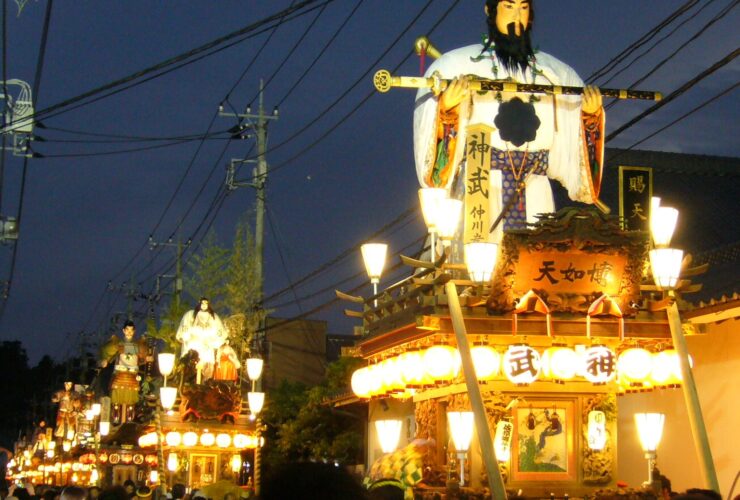
The character of the day changes completely after dark. In the evening the floats switch to toire-hikko, hung with lanterns and pulled slowly through the streets to a much quieter rhythm. If the daytime running looks like a contact sport, the night procession is closer to a promenade.
Look at the floats themselves when they are parked: the relief carvings depict scenes from kabuki and classical tales, and the city publishes a float-by-float catalogue of the motifs.
Tickets and Admission
Watching from public streets is free. Paid grandstand seating is sold around Kankanba by a private operator, with hill-side and sea-side stands and shaded VIP seats; 2026 tickets went on sale on 3 July. Prices are not published by the city, so book through the operator directly.
Tips for Visitors
Pick your session. The 06:00 start on 19 September is one of the fastest pulls of the festival and far less crowded than mid-morning. The lantern procession runs roughly 20:00–22:00 and is the one to bring a camera for.
Stand where the marshals tell you to. These floats weigh several tonnes and cannot stop. Corner barriers are there for a reason.
Read the closure map first. Once the pulling starts, crossing the route can mean a long detour, so decide which side of the course you want to be on before you arrive.
Access and Map
| Dates | 19–20 September 2026 (trial pulls 6 and 18 September) |
|---|---|
| Hours | 19 Sep 06:00–22:00; 20 Sep 09:00–22:00 |
| Venue | Kishiwada and Haruki districts, Kishiwada City, Osaka |
| Access | Nankai Main Line to Kishiwada Station, approx. 10 min walk to Kankanba; Haruki Station for the Haruki district |
| Admission | Free from public streets; paid grandstand seats sold separately by a private operator |
| Official site | Kishiwada City |
Source: Kishiwada City official website
Image: Photo: Kounosu / Wikimedia Commons, CC BY-SA 3.0

.png)