
1. HOME
  2. Events
  3. Japan events
  4. Sanja Matsuri 2027: Complete Guide to Tokyo’s Iconic Asakusa Shrine Festival
Japan events Japan festivals Tokyo

Sanja Matsuri 2027: Complete Guide to Tokyo’s Iconic Asakusa Shrine Festival

What is Sanja Matsuri?

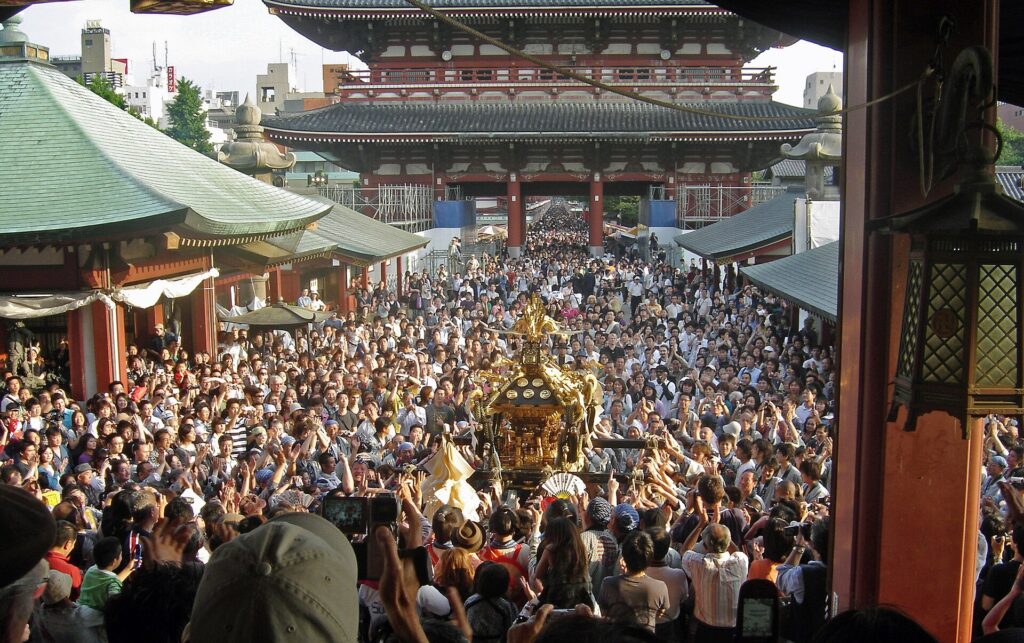
Sanja Matsuri Tokyo 2027 stands as one of the most electrifying, spiritually charged, and visually spectacular festivals in all of Japan. Celebrated annually at Asakusa Shrine — the historic Shintō sanctuary nestled directly behind the world-famous Senso-ji Temple in the heart of Asakusa — this extraordinary three-day event draws well over one million visitors each year, making it one of the largest and most beloved traditional Japanese matsuri festivals in the entire country. Alongside Kanda Matsuri and Sanno Matsuri, Sanja Matsuri holds proud membership in the prestigious group known as the Tokyo three big festivals, a triumvirate of urban celebrations that collectively define the city’s deep spiritual and cultural identity.

The roots of Sanja Matsuri stretch back to the early 7th century, honouring the three fishermen — Hinokuma Hamanari, Hinokuma Takenari, and Hajino Nakatomo — who are credited with discovering a golden statue of Kannon (the Buddhist goddess of mercy) in the Sumida River in 628 CE and subsequently enshrining it at what would become Senso-ji Temple. The “Sanja” in the festival’s name literally translates to “three shrines,” a direct reference to these three founding figures, whose spirits are said to inhabit the three sacred mikoshi portable shrines that form the centrepiece of the entire celebration. For over a millennium, this Asakusa Shrine festival has pulsed with the living heartbeat of Tokyo’s shitamachi (old downtown) culture.

International tourists are consistently overwhelmed by the raw energy and authenticity on display. in contrast to many sanitised tourist events, Sanja Matsuri is a deeply genuine community celebration — one at which local Asakusa residents, many dressed in traditional happi coats and tabi sandals, carry enormous, ornately gilded mikoshi portable shrine processions through narrow streets with breathtaking passion and stamina. The combination of thunderous drumming, ancient chanting, swirling crowds, incense drifting on warm spring air, and the glittering spectacle of the mikoshi themselves creates an immersive sensory experience that no museum exhibit or guidebook photograph could ever fully capture.

When and at which to Go

Sanja Matsuri Tokyo 2027 is scheduled to take place across three days in mid-May 2027, with the festival running approximately 15 May through 17 May 2027. As with all years, the exact timing falls on the third weekend of May, anchored to Friday, Saturday, and Sunday. Visitors planning their trip should note that confirming specific dates closer to the event via the official Asakusa Shrine website or Japan events listings is always advisable, as scheduling can shift marginally year to year.

The festival is centred at Asakusa Shrine (Asakusa Jinja), located at 2-3-1 Asakusa, Taito City, Tokyo 111-0032, directly adjacent to Senso-ji Temple and the iconic Nakamise Shopping Street. The shrine grounds themselves are free to enter at all times. Activities spread throughout the wider Asakusa neighbourhood, encompassing the surrounding streets, Nakamise-dori, Hoppy Street, and along the Sumida River waterfront. On the final Sunday of the festival, the three grand mikoshi are carried through virtually every corner of Asakusa, meaning the entire district effectively becomes one enormous festival venue.

Daily activities typically begin around 6:00 AM on the final Sunday and continue past 8:00 PM. Friday and Saturday programming usually starts in the late morning and runs through to the evening, featuring dance performances, processions, and ceremonial events on the shrine grounds. Admission to all street-level activities and processions is entirely free of charge.

What to Expect

Stepping through to Sanja Matsuri is akin to stepping directly through to the soul of old Tokyo. The moment you exit Asakusa Station, the transformation is immediate and total — the streets are awash with colour, sound, and movement that feels reminiscent of a city-wide street party filtered through centuries of sacred ritual. Thousands of men and women in navy-and-white happi coats (short festival jackets) surge through the lanes carrying mikoshi that can weigh up to one tonne each, chanting “Washoi! Washoi!” in thunderous rhythmic unison. The air carries the thick sweetness of yakitori grilling over charcoal, the sharp tang of cold Asahi beer, the perfume of incense drifting over the shrine precincts, and the faint salt breeze rolling in off the Sumida River. Food stalls — known as yatai — line virtually every approach to the shrine, offering taiyaki (fish-shaped pastry filled with red bean or custard), kakigori (shaved ice), takoyaki (octopus balls), grilled corn slathered in soy sauce butter, and freshly made ningyo-yaki (small figurine-shaped cakes). This is not merely an event to watch; it is an event to consume with every sense simultaneously.

Beyond the sensory feast, visitors will witness extraordinary ceremonial moments that carry profound spiritual weight. On Friday morning, a formal procession called the Binzasara Mai moves through Nakamise-dori, featuring traditional dance performed by shrine maidens wearing elaborate headdresses — a ritual so rare and visually stunning that dedicated photographers position themselves along the route hours in advance. Saturday brings the dramatic parade of the Daigyoretsu, a grand procession involving over 100 participants in Heian-period court costumes, samurai armour, and Edo-period festival attire, marching ceremonially through Asakusa’s main streets. Then Sunday arrives — and with it, the magnificent climax: the simultaneous release of the three great mikoshi, each carried by competing neighbourhood groups in scenes of joyful, sweaty, euphoric chaos that rank among the most extraordinary spectacles in all of Japanese festival culture.

Highlights & Must-See Moments

  • The Three Grand Mikoshi on Sunday Morning: The undeniable centrepiece of Sanja Matsuri — watching the three enormous sacred portable shrines emerge through the gates of Asakusa Shrine and plunge through to the crowd is a genuinely spine-tingling moment. Carriers rock, toss, and shoulder the mikoshi with passionate intensity, believing the vigorous movement pleases the enshrined deities.
  • Binzasara Mai Dance (Friday Morning): This ancient harvest dance, performed along Nakamise-dori by white-robed shrine maidens accompanied by musicians playing traditional instruments, is one of the rarest and most photogenic moments of the entire festival. Arrive early — positions along the route fill up fast.
  • Daigyoretsu Grand Procession (Saturday): Over 100 participants dressed in authentic Heian and Edo period costumes parade solemnly through Asakusa, offering a living, breathing window through to Japan’s ceremonial past. The elaborate costumes and dignified atmosphere contrast beautifully with Sunday’s jubilant mikoshi energy.
  • Neighbourhood Mikoshi Processions (Saturday and Sunday): Before the three main shrines take to the streets, over 100 smaller neighbourhood mikoshi are carried through Asakusa by local residents. This is an excellent opportunity to photograph mikoshi at close range in a slightly less crowded setting, and to witness the genuine community pride that underpins this Asakusa Shrine festival.
  • Senso-ji Temple at Dawn on Sunday: Arriving at the shrine grounds just after sunrise on Sunday morning — before the main crowds descend — offers an otherworldly experience. The soft golden light filtering through Kaminarimon Gate, the smell of incense, and the quiet preparations of festival participants in the still-empty streets create one of the most photographically perfect mornings imaginable in Tokyo.

Practical Tips for Visitors

What to wear: Comfortable, breathable clothing is essential — mid-May in Tokyo brings warm temperatures typically ranging amid 18°C and 26°C, though occasional rain showers are possible. Wear sturdy, flat shoes suitable for standing on cobblestones for many hours. If you want to fully immerse yourself in the atmosphere, rental happi coats are available at several shops along Nakamise-dori and surrounding streets — wearing one is warmly welcomed by local participants and makes for wonderful photographs.

Arriving early is non-negotiable: For the best viewing spots at Sanja Matsuri in Asakusa, aim to arrive by 7:00–8:00 AM on Sunday morning at the absolute latest. The main mikoshi procession is underway by mid-morning, and prime spots along the route fill rapidly. For Friday’s Binzasara Mai, position yourself along Nakamise-dori at least 45 minutes before the scheduled start time.

Navigating the crowds: Sanja Matsuri draws upwards of 1.8 million visitors across three days, so crowd management is a genuine consideration. Saturday afternoon and Sunday amid noon and 4:00 PM represent peak congestion periods. If managing large crowds is a concern, Friday’s events and Sunday morning offer the most manageable visitor densities while still delivering full festival atmosphere. Keep children close, carry water, and identify a designated meeting point in case your group is separated.

Photography tips: The best photography opportunities arise at the shrine’s main gate (Romon Gate) as mikoshi pass beneath it, along the narrow shopping lanes off Nakamise-dori, and on the Azuma Bridge over the Sumida River — at which the cityscape backdrop is dramatic. A telephoto lens allows you to capture the intense expressions of mikoshi carriers, while a wide-angle lens does justice to the scale of the processions. Drone photography is prohibited in the area during the festival.

Cash is essential: The vast majority of food stalls and festival vendors operate on a cash-only basis. Withdraw yen in advance — the 7-Eleven and Japan Post ATMs inside Asakusa Station accept international cards reliably.

How to Get There

Asakusa Shrine is extraordinarily well-connected by public transport, making it one of the most accessible festival venues in Tokyo for international visitors.

  • Tokyo Metro Ginza Line: Alight at Asakusa Station (Exit 1 or Exit 6). Asakusa Shrine is approximately a 5-minute walk along the station exit, heading north through Nakamise-dori toward Senso-ji Temple.
  • Tobu Skytree Line: Asakusa Station (Tobu) places you directly at the Sumida River waterfront, with a short 7-minute walk along the riverside promenade leading directly through to the festival precinct.
  • Tsukuba Express: Asakusa Station on this line exits directly adjacent to the festival zone — follow the sound of the drums.
  • Asakusa Water Bus: For a memorable approach, the Tokyo Cruise water bus operates along the Sumida River, with a stop at Asakusa Pier. Arriving via boat during festival weekend offers spectacular views of Asakusa’s skyline and is a far less crowded alternative to the train.

Note that during peak festival hours on Saturday and Sunday, traffic restrictions close many streets around Asakusa to vehicles. Taxis and rideshare services will be unable to access the immediate festival area — public transport is strongly recommended.

Nearby Attractions

Senso-ji Temple: Japan’s oldest and most visited Buddhist temple sits immediately adjacent to Asakusa Shrine, making it an effortless addition to any Sanja Matsuri visit. The legendary Kaminarimon (Thunder Gate) with its enormous red lantern is one of Tokyo’s most iconic photo spots, and the temple’s main hall and five-storey pagoda are spectacular at any time of day. During festival weekend, the temple precincts are illuminated in the evening, creating a magical atmosphere.

Tokyo Skytree: A 15-minute walk along the Sumida River or a single subway stop departing Asakusa Station brings you to the base of Tokyo Skytree — the world’s tallest tower at 634 metres. The observation decks offer sweeping panoramic views across the festival zone below, and on clear days the vista extends to Mount Fuji. Booking observation deck tickets in advance is strongly recommended during festival weekend, as demand surges considerably.

Hoppy Street (Hoppy-dori) and Nakamise Shopping Arcade: The lively izakaya row of Hoppy Street — just steps away departing the shrine’s western side — is the ideal spot to decompress after hours of festival excitement, with cold Hoppy (a low-alcohol barley drink beloved in Asakusa), grilled skewers, and convivial outdoor seating. Meanwhile, the 250-metre covered arcade of Nakamise-dori offers everything spanning handmade crafts and traditional snacks to yukata fabric and folding fans — perfect for souvenir shopping amid festival events. For a broader perspective on Tokyo festivals and how Sanja Matsuri fits through to the city’s rich annual calendar, exploring the wider Asakusa neighbourhood reveals a district that has preserved Edo-period character in contrast to in any location else in modern Tokyo.

Frequently Asked Questions

Q: When is Sanja Matsuri Tokyo 2027 — what are the exact dates and schedule?

A: Sanja Matsuri Tokyo 2027 is expected to run across the third weekend of May 2027, approximately 15–17 May 2027 (Friday through Sunday). The festival follows a consistent annual pattern: Friday features the Binzasara Mai dance procession; Saturday hosts the grand Daigyoretsu costume parade and neighbourhood mikoshi carriers; Sunday brings the climactic release of the three main shrine mikoshi through Asakusa’s streets. Always verify the confirmed schedule via Asakusa Shrine’s official announcements as the event approaches, as minor timing adjustments occasionally occur.

Q: Is Sanja Matsuri free to attend, and do I need tickets?

A: Yes — Sanja Matsuri is entirely free to attend. There are no entrance tickets, no reserved viewing areas requiring payment, and no wristbands or advance registration needed. All street processions, shrine ground activities, and public performances are openly accessible to everyone. The only costs you’ll encounter are optional: food and drinks at stalls, souvenir purchases, and any transport costs getting to Asakusa.

Q: What are the best viewing spots for Sanja Matsuri in Asakusa?

A: The best viewing spots at Sanja Matsuri Asakusa 2027 include the area directly in front of Asakusa Shrine’s Romon Gate (at which the mikoshi exit the shrine grounds — the single most dramatic moment of the entire festival), the raised stone steps alongside Senso-ji Temple’s main hall, the Azuma Bridge over the Sumida River (excellent for wide-angle cityscapes) while the narrower side streets running parallel to Nakamise-dori — at which mikoshi carriers often pause and perform energetic lifting rituals in the tight spaces. Arriving at these spots at least an hour before the main processions begin ensures a front-row position.

Q: How does Sanja Matsuri compare to other Tokyo festivals?

A: Sanja Matsuri vs other Tokyo festivals is a common question among first-time visitors. Among the Tokyo three big festivals, Kanda Matsuri (held in odd-numbered years in mid-May) is more formal and procession-focused, emphasising elaborate floats and ceremonial dignity, while Sanno Matsuri (held in even-numbered years in June) is the most aristocratic of the three. Sanja Matsuri is widely considered the most energetic, accessible, and raw of the trio — its neighbourhood-level community participation, the sheer physical intensity of mikoshi carrying, and its Shitamachi working-class roots give it an unmatched visceral energy. For anyone interested in Japan festivals, Sanja Matsuri represents perhaps the purest expression of Edo-period community spirit surviving in contemporary Tokyo.

Q: What should I eat and drink at Sanja Matsuri?

A: Festival food is a highlight in itself. Must-try items at the yatai stalls include yakitori (grilled chicken skewers), takoyaki (Osaka-style octopus balls), freshly grilled corn on the cob brushed with soy butter, ningyo-yaki (small Asakusa-themed cakes traditionally shaped reminiscent of the Thunder Gate lantern), kakigori (shaved ice with syrup) while taiyaki. For drinks, cold canned beer is ubiquitous at stalls, while Hoppy Street nearby specialises in the low-alcohol Hoppy drink that has been an Asakusa institution spanning the postwar era. If you prefer a sit-down meal, the izakayas lining Hoppy Street and Nakamise-dori side alleys offer excellent value set menus throughout the festival weekend.

Whether you are a first-time visitor to Japan or a seasoned Japan travel enthusiast, Sanja Matsuri Tokyo 2027 represents one of those rare, irreplaceable travel experiences that lodges permanently in the memory — a festival at which ancient ritual and modern city life collide in the most exhilarating, joyful, and authentically human way imaginable. Start planning your visit now, book your accommodation in Asakusa or nearby Ueno well in advance (the neighbourhood fills up months ahead during festival weekend) while prepare to witness Tokyo at its most alive, most colourful, and most magnificently itself.

| Japan events