
Kansai · NaraCultural
Nara’s formal Obon service — three days of memorial rites, sutra copying and a dharma talk at a World Heritage temple beside the station.
Overview
Urabon-e (盋蘭盆会), the Japanese Ullambana, is the Buddhist observance that welcomes ancestral spirits back and prays for their enlightenment — the religious core of what most people experience as the Obon holiday.
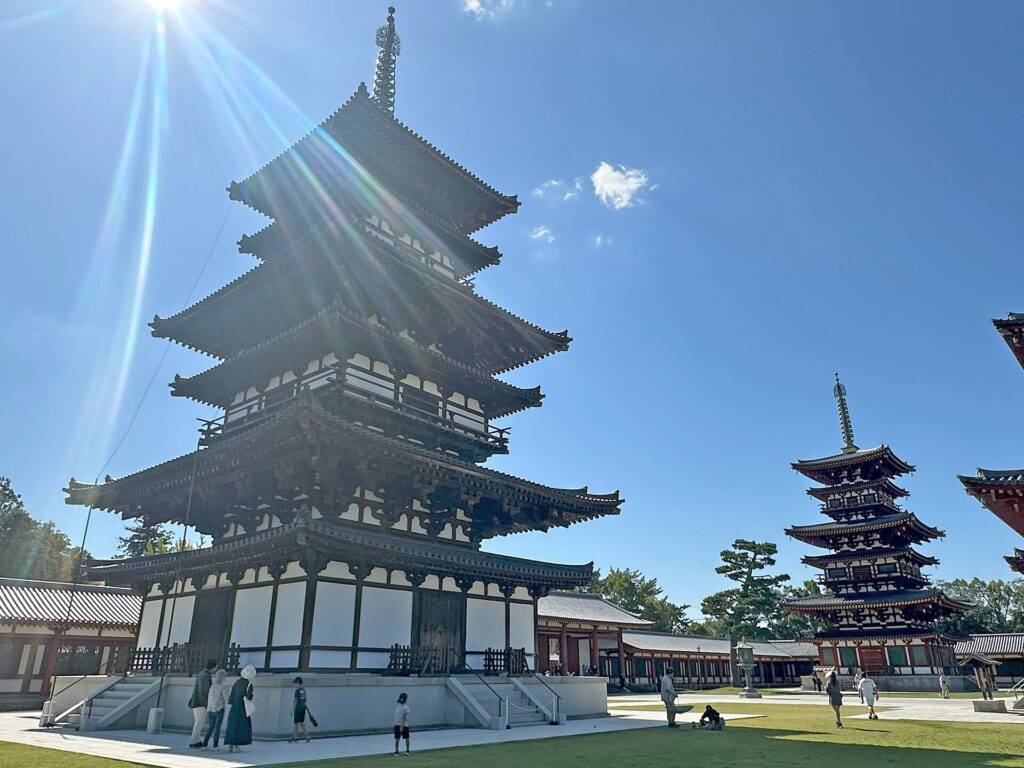
Yakushiji, head temple of the Hosso school and a UNESCO World Heritage component of the “Historic Monuments of Ancient Nara”, holds its Urabon-e over three days in August. Unlike Nara’s lantern events, this is a service rather than a spectacle: you attend it, rather than watch it.
When and Where
Dates: 13–15 August 2026 (fixed annual dates).
Times: the Jikido opens at 13:00; the Urabon-e service begins at 13:30, led by Head Priest Ikoma Kitatsu, with a segaki toba memorial offering. A dharma talk follows from 14:00. Sutra-copying sessions run 09:00–17:00 in the Shakyo Dojo, with a udon lunch for participants 11:00–13:30.
Venue: Yakushiji Jikido (Refectory) and Shakyo Dojo, 457 Nishinokyo-cho, Nara City.
Getting There
Take the Kintetsu Kashihara Line to Nishinokyo Station — the temple is directly beside it, about a minute on foot. Coming from Kintetsu Nara, change at Yamato-Saidaiji; Nishinokyo is not on the Nara Line.
Parking is available at ¥800 for a standard car and ¥200 for a motorcycle.
What to Expect
The service is conducted in the Jikido before its principal image, a Pure Land painting of the Amida Triad. Segaki rites — offerings to hungry ghosts — and toba memorial tablets form part of the observance, and the head priest gives the dharma talk immediately afterwards.
Sutra copying runs all day and is open to visitors; Yakushiji is well known for this practice and offers perpetual memorial services through its Hyakumanto Kuyo. The general precinct, including the Kondo, Daikodo and Toindo, is open on normal hours throughout.
Tickets and Admission
Standard precinct admission applies: ¥1,000 for adults, ¥600 for junior and senior high school students, ¥200 for elementary students; groups of 25 or more pay ¥900 / ¥540 / ¥180. This covers the Kondo, Daikodo and Toindo.
Sutra copying carries a separate ¥2,000 perpetual-memorial offering. Admission is free for holders of Nara City’s Nanamaru Card or Roshun Techo, and half price with a disability certificate for the holder plus one carer (cash only).
Nara has two other notable Obon rites in the same week: Todaiji’s Manto Kuyoe on 15 August, 19:00–21:30, when around 2,500 lanterns line the approach and the observation window on the Daibutsuden facade is opened; and Gangoji’s Jizo-e Manto Kuyo on 23–24 August.
Tips for Visitors
Arrive before 13:00 to be seated in the Jikido. The talk follows at 14:00, so budget roughly ninety minutes for the service and talk together.
Fill the morning with sutra copying. Sessions run from 09:00 and include a udon lunch, which lands neatly before the 13:30 service.
Watch the line change. Nishinokyo is on the Kashihara Line, not the Nara Line — change at Yamato-Saidaiji.
Access and Map
| Dates | 13–15 August 2026 (fixed annually) |
|---|---|
| Times | Jikido opens 13:00; service 13:30; dharma talk from 14:00; sutra copying 09:00–17:00 |
| Venue | Yakushiji, 457 Nishinokyo-cho, Nara City, Nara |
| Access | Kintetsu Kashihara Line to Nishinokyo Station, approx. 1 min walk |
| Admission | ¥1,000 adults / ¥600 JHS & HS / ¥200 elementary. Sutra copying ¥2,000 separately. |
| Official site | Yakushiji Temple |
Source: Yakushiji Temple official site
Also: Yakushiji visitor information
Image: Photo: Tokumeigakarinoaoshima / Wikimedia Commons, CC BY-SA 4.0 — the temple pagodas (venue), not the service

.png)