
Chubu · AichiFestival
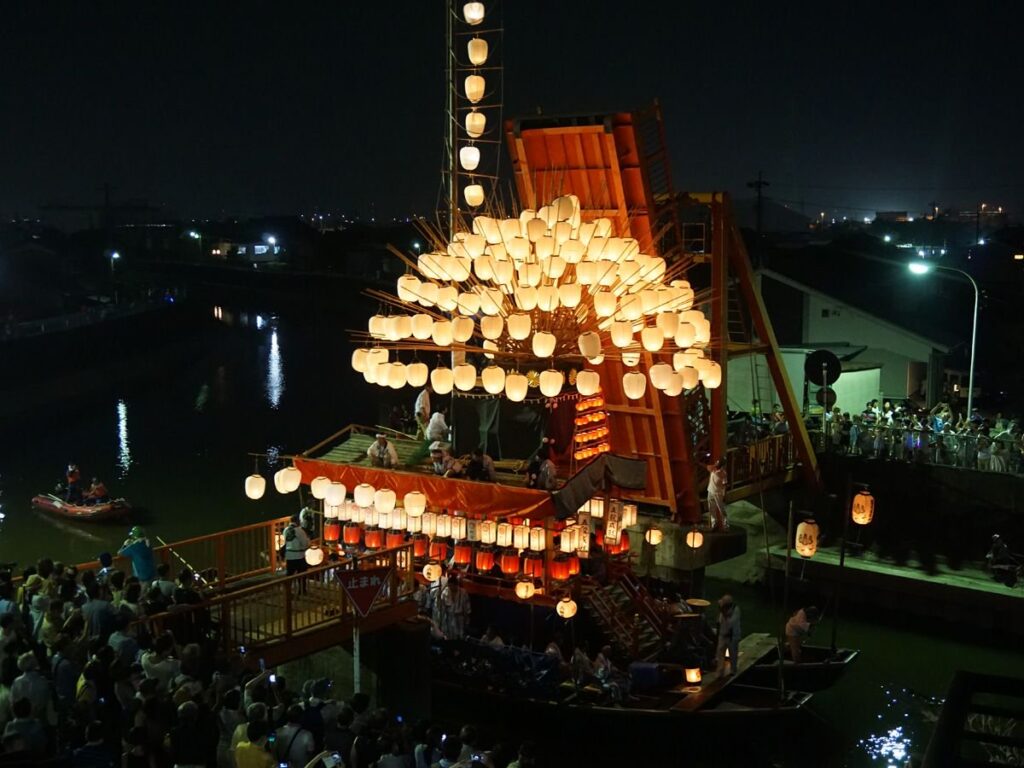
A lantern-covered boat drifts down the Kanie River on the first Saturday of August, the centrepiece of a UNESCO-listed rite that unfolds over roughly a hundred days.
Overview
Sunari Matsuri (須成祭) is the river festival of Tomiyoshi-Takehaya Shrine and Hakken-sha in Kanie Town, west of Nagoya. It has roughly 400 years of history and is rooted in Tenno belief — rites intended to drive off plague and summer sickness.
In March 2012 it was designated a National Important Intangible Folk Cultural Property, and in December 2016 it was inscribed on the UNESCO Intangible Cultural Heritage list as one of the 33 float festivals making up “Yama, Hoko, Yatai, float festivals in Japan”. It is a small-town festival with an unusually large pedigree.
When and Where
The two main days fall on the first Saturday of August and the following Sunday. In 2026 that was Saturday 1 August (Yoimatsuri, the evening festival, from around 20:00) and Sunday 2 August (Asamatsuri, the morning festival, from around 09:00).
These are only the visible peak. Locals call Sunari the “hundred-day festival”: the cycle opens with chigo-sadame in July — the 2026 reed-cutting rite set out from Tenno-bashi at 08:00 on 26 July — and closes with tanaoroshi in late October.
The setting is the stretch of the Kanie River between Kazari-bashi and Tenno-bashi, beside the shrines at 1363 Sunari Kadoyashiki-kami, Kanie-cho.
What to Expect
- The Yoimatsuri makiwara boat, hung with lanterns in symbolic counts: 365 in the semicircle for the days of the year, 12 down the centre for the months (13 in a leap year), and 30 hozuki lanterns for the days of a month.
- Miyoshi-bashi, whose right-hand half lifts clear so the boat can pass beneath it.
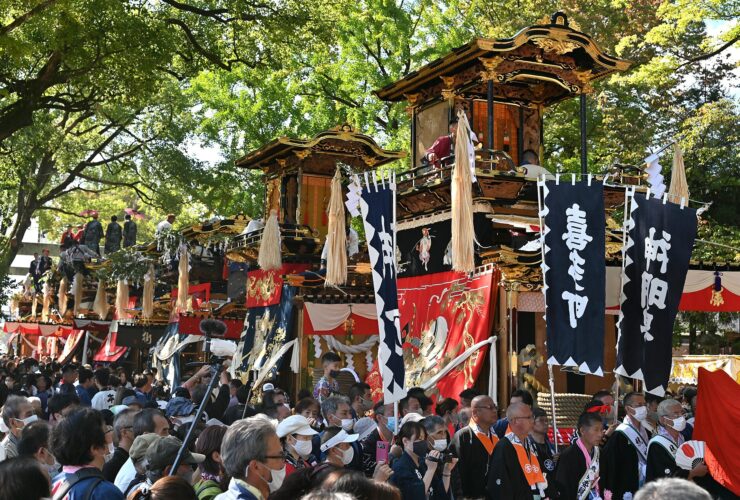
- The Asamatsuri danjiri-bune float boat by daylight, a completely different character from the night procession.
- Nage-bana — plum and cherry branches from the boat’s decoration, handed out to spectators; keeping one at home is said to ward off lightning and summer illness.
- The miyoshi-nagashi rite, in which reed bundles are floated away downstream to carry off misfortune.
Admission and Tickets
Free. Viewing is from the riverbanks and streets, with no ticketing. Parking is available and shuttle buses ran in 2026, but traffic restrictions apply around the venue on both main days — check the town’s notice before driving.
Tips for Visitors
The Saturday night boat is the image most people come for, so arrive on the riverbank by 19:30 to claim a spot near Miyoshi-bashi. Kanie is only about 10 minutes from Nagoya Station by JR Kansai Line, which makes an evening visit easy without changing hotels. If you would rather see the mechanics of the thing than the lanterns, come back for the Sunday morning boat instead — far fewer people, and you can actually see the hull.
Access and Map
| Dates | First Sat/Sun of August (2026: 1–2 August; wider cycle July–late October) |
|---|---|
| Time | Yoimatsuri from approx. 20:00; Asamatsuri from approx. 09:00 |
| Venue | Tomiyoshi-Takehaya Shrine / Hakken-sha and the Kanie River, Kanie Town |
| Nearest station | JR Kanie Station (Kansai Line), 10 min walk |
| Admission | Free |
| Official site | kaninavi.jp |
Source: Kanie Town Tourism Association
Image: Photo: 秘密結社水曜日 / Wikimedia Commons (CC BY-SA 4.0) — licence

.png)