
Every Culture Day, a column of several hundred people in Edo-period costume walks six kilometres of the old Tokaido highway through a hot-spring town, calling out the warning that once cleared the road for a passing lord.
Overview
The Hakone Daimyo Gyoretsu recreates the sankin kotai, the system under which the Tokugawa shogunate required provincial lords to travel to and from the capital at regular intervals. Hakone sat on the Tokaido at one of the most important checkpoints on that road, so the procession is staged where the real thing once passed. It began in 1935 as the centrepiece of a Hakone tourism exposition and is now counted among the town three great festivals.
The scale of a genuine daimyo procession was fixed by the size of the domain, and this one follows the standing of the Odawara domain at 113,000 koku. That gives a core column of about 170 people; with the bands and groups that join it, the full parade runs to roughly 400.
When and where
The date does not move: the procession is held every year on 3 November, Culture Day, which in 2026 falls on a Tuesday and is a public holiday. It sets off at 10:00 from Yumoto Elementary School, beside Sounji temple, and takes about four and a half hours to cover some six kilometres of the old highway and the streets of Hakone-Yumoto, finishing at the Yumoto Fujiya Hotel. The detailed timetable and the traffic-restriction map are published by the local tourist association in October.
Getting there
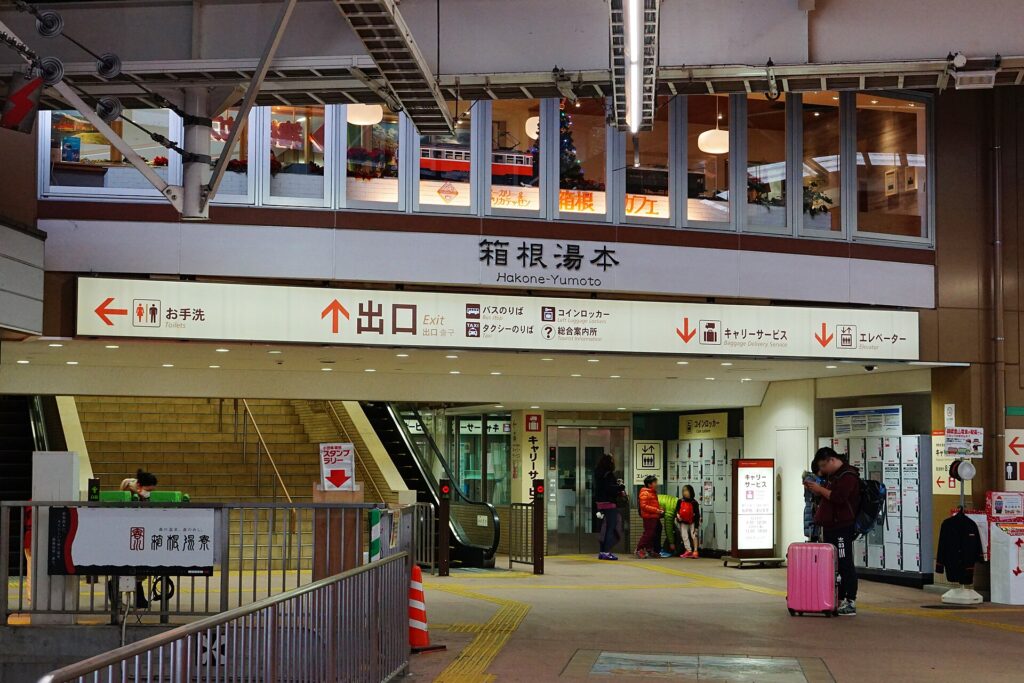
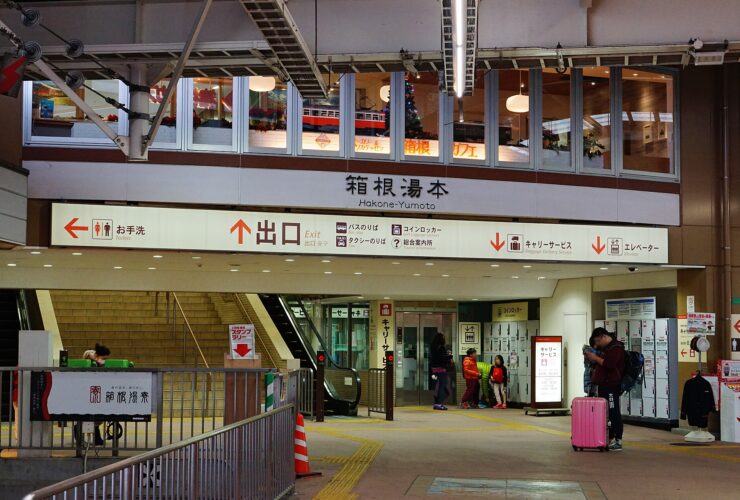
Hakone-Yumoto is the gateway to Hakone and the easiest of Japan famous hot-spring areas to reach from Tokyo: the Odakyu Romancecar runs from Shinjuku in around 85 minutes, or take the Tokaido Shinkansen to Odawara and change to the Hakone Tozan line for a 15-minute ride. Come by train. Roads along the route are closed to vehicles for much of the day, buses are diverted or suspended, and pedestrian flow at Hakone-Yumoto Station itself is controlled when the crowds build.
What to expect
The column is led by standard-bearers and the men who clear the way, and the cry of shita ni, shita ni – roughly, down, down – is the signal that once required commoners to lower their heads. Behind them come feather-topped spears twirled and thrown between bearers, ladies-in-waiting, a lacquered palanquin, and at the rear the porters who sing the old songs of the road. Matchlock gunners of the Odawara Hojo corps fire volleys, and marching bands, a United States Army Japan band and the geisha of Hakone-Yumoto all take part. Early November is also close to the peak of the autumn colour on the Hakone slopes.
Admission and practicalities
Watching costs nothing and there is no seating; people line the street the length of the route. Light rain does not stop the procession, but heavy rain cancels it. Because the parade moves slowly, you can watch it in one place and then walk ahead to see it again further along.
Tips for visitors
The stretch near Hakone-Yumoto Station is the most crowded; a spot further up the old highway, or in the quieter Taki-dori area, gives you a closer view with less waiting. Arrive well before the column reaches you, since the crossings close ahead of it. Combine the day with a bath – most day-use onsen along the route stay open – and if you are staying overnight in Hakone, check with your hotel about shuttle times, which change to work around the closures.
Access and map
| Date | 3 November 2026 (Culture Day), from 10:00 |
|---|---|
| Route | Yumoto Elementary School to the Yumoto Fujiya Hotel, about 6 km through Hakone-Yumoto, Kanagawa |
| Access | Hakone-Yumoto Station on the Odakyu and Hakone Tozan lines |
| Admission | Free |
| Note | Roads on the route close for much of the day; bus services are affected |
Source: Hakone Town Tourist Association
Image: No image yet – a licensed photograph is being sourced.

.png)