
1. HOME
  2. Events
  3. Japan events
  4. Hakata Gion Yamakasa 2026: Festival Guide & Float Race
Japan events Japan festivals

Hakata Gion Yamakasa 2026: Festival Guide & Float Race
What is Hakata Gion Yamakasa?

Hakata Gion Yamakasa is one of Japan’s most exhilarating and ancient festivals, held every July in Fukuoka’s historic Hakata district. Dating back over 760 years to the Kamakura period, the festival is rooted in a purification ritual performed by the Buddhist monk Shoichi Kokushi, who is said to have been carried through the streets on a portable shrine to ward off plague. Today it is designated an Important Intangible Folk Cultural Property of Japan and, since 2016, forms part of the UNESCO Intangible Cultural Heritage list of “Yama, Hoko, Yatai float festivals.” If you’re looking for a festival that blends raw physical energy, deep spiritual tradition, and genuine community pride, Japan festivals don’t get much more authentic than this one.

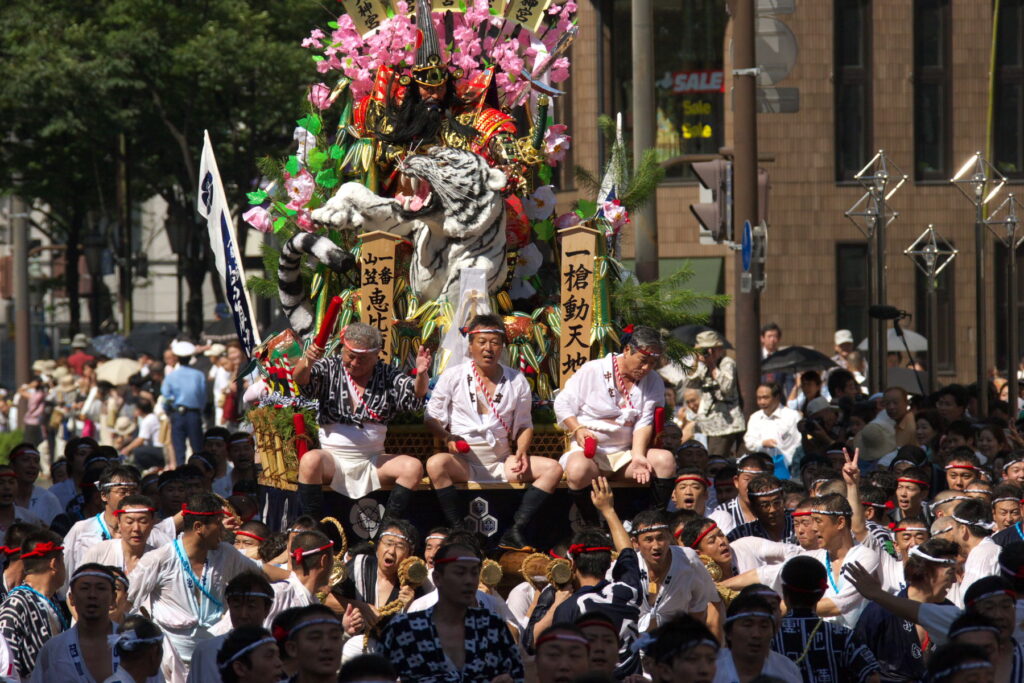
The heart of the festival is the Kazariyama — elaborately decorated display floats that tower up to fifteen metres tall and are placed around Hakata throughout July. These are the visual showpieces that draw visitors during the first two weeks. But the emotional climax is the Oiyama race on July 15, when teams of loincloth-clad men carry much smaller but still formidable racing floats called Kakiyama at a full sprint through the streets of Hakata in the early hours of the morning. It is breathtaking, primal, and utterly unforgettable.

When and at which to Go

Hakata Gion Yamakasa 2026 runs officially as a festival period spanning July 1 through July 15, 2026, with events and activities building in intensity throughout those two weeks. The action is centred on the Hakata district of Fukuoka City, with the display floats placed at several locations across the neighbourhood including the grounds of Kushida Shrine, which serves as the spiritual home of the festival. The grand finale — the Oiyama race — begins in the pre-dawn hours of July 15, starting around 4:59 a.m. at Kushida Shrine and finishing several kilometres away. For specific location maps and the year’s confirmed schedule, check the official Fukuoka City tourism website closer to the date.

What to Expect

Arriving in Hakata during the first two weeks of July means immersing yourself in a city fully alive with festival spirit. The Kazariyama display floats are installed at prominent spots throughout the Hakata area and are illuminated beautifully at night, making evening walks through the neighbourhood a genuine delight. Each float depicts scenes ranging in theme, spanning historical battles to mythological tales and contemporary pop culture tributes — crafted by skilled artisans to extraordinary detail. Crowds gather to photograph and admire these towering structures, and the atmosphere is festive without being chaotic during daytime hours.

The Oiyama race on the morning of July 15 is in a different category entirely. Spectators line the streets hours before dawn to claim a good viewing spot, and the air practically vibrates with anticipation. Seven teams carry their floats along a set course of roughly five kilometres in a time trial format, each team departing Kushida Shrine in sequence. The combination of drumbeats, chanting, the thunder of feet on the pavement, and the roar of the crowd makes this one of the most viscerally exciting things you can witness at any Japan events calendar entry. Arriving early — very early — is essential.

Highlights & Must-See Moments

  • The Oiyama Float Race at Dawn (July 15): The Hakata Gion Yamakasa float race morning is the undisputed centrepiece. Teams sprint carrying floats weighing over a tonne through the pre-dawn streets, with the first team departing Kushida Shrine at approximately 4:59 a.m. Set an alarm, stake out your spot by 3:00 a.m. if possible, and prepare to be amazed.
  • Kazariyama Display Floats: Spread across Hakata throughout July 1–15, these towering decorative floats are free to view and most impressive when lit up after dark. Each one tells a unique story and represents a different neighbourhood team, so it’s worth walking the full circuit to compare them.
  • Kushida Shrine Atmosphere: Even outside of the main race, Kushida Shrine pulses with energy during the festival period. Visiting to see one of the permanent display floats housed there and to soak up the ceremonial preparations is a rewarding experience in itself.

Admission & Budget

One of the most appealing things about Hakata Gion Yamakasa for international tourists is that it offers free admission across virtually all of its public events. Viewing the Kazariyama display floats around the Hakata neighbourhood costs nothing, and lining the streets to watch the Oiyama race is free. Some grandstand seating areas may be set up near Kushida Shrine with reserved spots — check the official tourism website for any ticketed viewing options for 2026. Beyond admission, budget for food stalls, local Hakata ramen, and transportation. Fukuoka is one of Japan’s most affordable major cities, making this an excellent value festival experience among all Japan travel options in summer.

Practical Tips for Visitors

July in Fukuoka is hot and humid, so wear light, breathable clothing and carry a small towel and portable fan — both are summer essentials in Kyushu. For the early morning Oiyama race, bring a light layer for the pre-dawn chill, as temperatures drop slightly before sunrise. Arrive at your chosen viewing spot along the race route no later than 3:00 a.m. to secure a good position; popular spots fill up fast. Note that women are traditionally prohibited in certain ceremonial areas out of historical custom, though viewing the race publicly is open to all. Respectful behaviour, staying behind barriers, and not obstructing participants is expected. Cash is useful for food stalls, though many Fukuoka businesses accept IC cards and cards.

How to Get There

Fukuoka is exceptionally well connected. The city is served by Fukuoka Airport, one of Japan’s most central urban airports, just a short metro ride through to the city. Bullet train (Shinkansen) travellers arrive at Hakata Station, which sits at the heart of the action — the Hakata district is essentially walking distance or a short taxi ride at the station. If you’re planning a Hakata Gion Yamakasa day trip departing Osaka, the Sanyo Shinkansen connects Shin-Osaka to Hakata in roughly two and a half hours. Once in Fukuoka, the subway and buses serve the Hakata area well. For exact route planning, consult the official Fukuoka City tourism site or Google Maps using “Hakata Station” as your starting reference point.

Hakata Gion Yamakasa 2026 is a once-in-a-lifetime festival experience hiding in plain sight — free, ferociously exciting, and steeped in genuine history. Book your Fukuoka trip early, set your alarm for July 15, and get ready for one of Japan’s greatest mornings.

| Japan events