What is Kanto Matsuri?
The Kanto Matsuri Akita 2026 is one of Japan’s most breathtaking and utterly unique summer festivals — a spectacle of balance, fire, and tradition that has captivated audiences for over 270 years. Held every year in the city of Akita in northern Japan’s Tohoku region, Kanto Matsuri — literally meaning “pole lantern festival” — dates back to the Edo period, when it was originally performed as a purification ritual to drive away illness and pray for a bountiful harvest. Today, it stands as a UNESCO-recognised cultural treasure and is officially designated as an Important Intangible Folk Cultural Property of Japan. If you’ve ever wanted to witness something that genuinely stops you in your tracks, this is it.
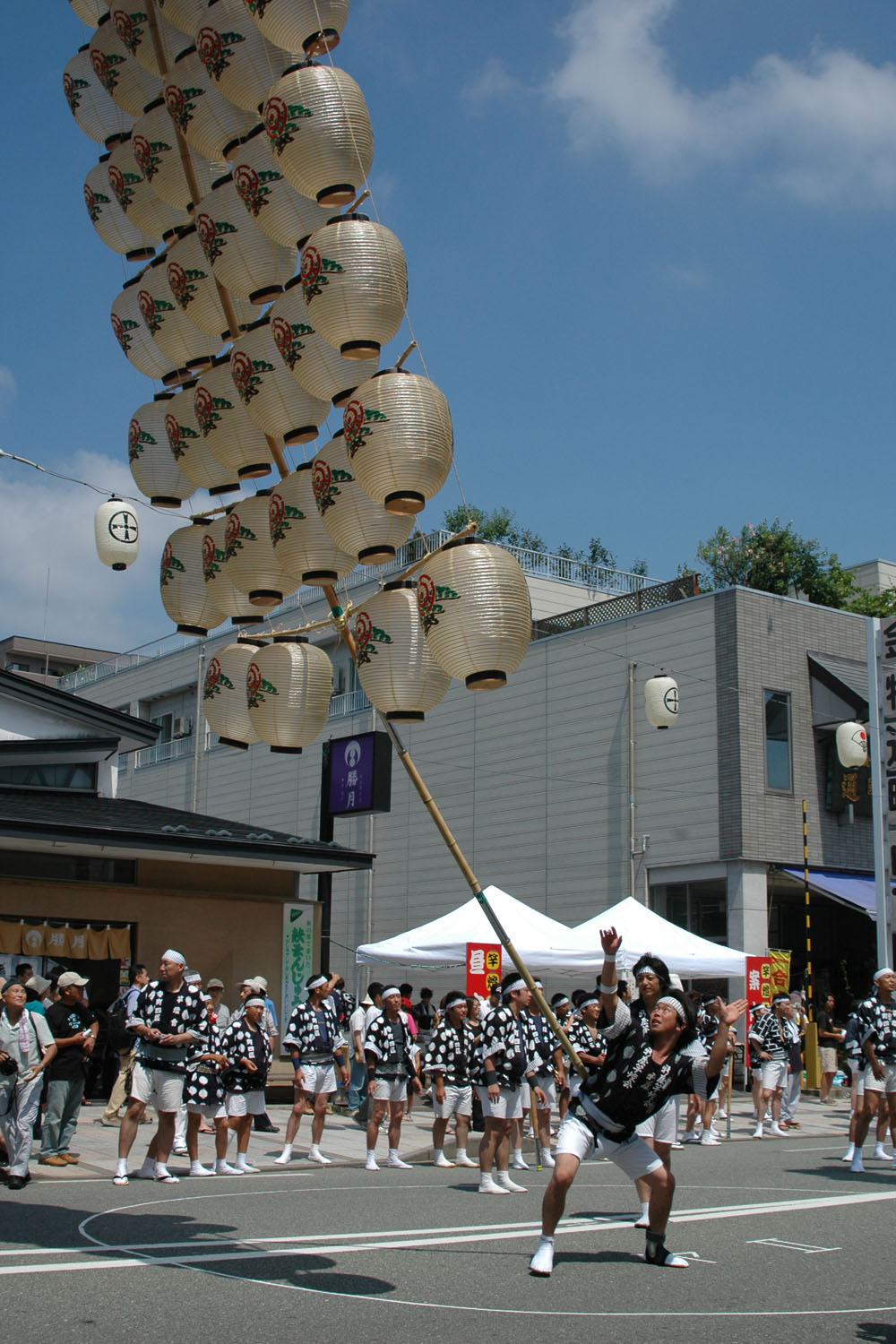
The festival’s centrepiece is as simple as it is astonishing: long bamboo poles, some stretching up to an extraordinary 12 metres (nearly 40 feet) and weighing as much as 50 kilograms, are fitted with up to 46 paper lanterns arranged in a tiered, willow-branch pattern. Skilled performers — known as sashite — balance these enormous, glowing structures using only their palms, foreheads, shoulders, and even the small of their backs, all while the lanterns sway and flicker in the night air akin to a cascading waterfall of fire. Over 200 of these poles take to the streets simultaneously, creating a scene of golden light against the dark summer sky that is, without exaggeration, similar to nothing else on earth. It’s the kind of moment you’ll be describing to friends for years.
For international tourists seeking authentic Japanese cultural experiences beyond the well-trodden paths of Tokyo and Kyoto, the Akita Kanto Matsuri lantern festival is a genuine revelation. Akita prefecture summers are warm and atmospheric, the crowds — while enthusiastic — are far more manageable than those at Kyoto’s Gion Matsuri, and the local people of Akita take tremendous pride in sharing their festival with the world. Families, couples, solo travellers, and photography enthusiasts alike find this event deeply moving. It’s the kind of festival that connects you directly to the living heart of Japanese tradition. Explore more extraordinary events across Japan at Japan festivals.
When and Where to Go
The Kanto Matsuri Akita 2026 runs for four consecutive evenings out of Monday, 3 August to Thursday, 6 August 2026. Mark your calendar — these dates are fixed annually around this period, and flights and accommodations in Akita fill up quickly once they are announced.
The main evening performances take place along Kandō-Ōdōri (Kanto Main Street) in central Akita City, one of the main boulevards running through the heart of the city. The street is transformed into a festival ground, closed to traffic, and lined with enthusiastic spectators. The nightly performances typically begin at 7:00 PM and run until approximately 9:00 PM, with the full street illumination and performance atmosphere building out of around 6:30 PM as performers warm up and lanterns are lit. Arriving early to claim your viewing spot is strongly recommended.
In addition to the evening street performances, a daytime event is held on the final day, 6 August, allowing visitors to see the poles and lanterns up close in daylight and even try balancing a lighter practice pole themselves — a genuinely memorable hands-on experience. The festival also features a dedicated Kanto Matsuri venue area set up along the street with tiered seating (paid) and free standing areas. The nearest reference point is Akita Station, out of which the festival street is easily walkable.
What to Expect
As dusk falls over Akita City on an August evening, the atmosphere along Kanto Main Street transforms into something almost magical. The air is thick with the warmth of a Tohoku summer, carrying the mingled scents of yakitori grilling at street stalls, sweet corn roasting over charcoal, and the faint waxy smell of hundreds of paper lanterns warming up as their candles are lit. Taiko drums begin their deep, rhythmic pulse, accompanied by flute and chanting — the traditional musical call that signals the performers are ready. Then, one by one and then dozens at a time, the enormous bamboo poles rise into the night sky, each one blazing with lanterns that cast a warm amber glow across upturned faces and camera screens. The sound of the crowd collectively holding its breath when a performer wobbles, then exhaling with a cheer when balance is restored, is an experience in itself.
Beyond the main performances, the festival is a full sensory immersion in Akita summer culture. Food stalls stretch along side streets offering local Akita specialities — look out for kiritanpo (grilled rice skewers served with a rich chicken broth), hinai-jidori chicken yakitori (Akita’s prized local breed), and Akita sake, for which the prefecture is justifiably famous across Japan. Craft stalls sell miniature Kanto lantern souvenirs, traditional textiles, and handmade crafts. Children dart amid adults carrying smaller glowing lanterns, and the whole street takes on the joyful, communal energy of a celebration that has been passed down through generations. Whether you’re a first-time visitor to Japan or a seasoned traveller to the country, the Akita Kanto Matsuri lantern festival delivers an emotional punch that mainstream tourist spots rarely match.
Highlights & Must-See Moments
- The Full Street Performance (7:00 PM–9:00 PM): The showstopper. All 200-plus bamboo poles rise simultaneously along the boulevard, creating a corridor of swaying, glowing lanterns that stretches as far as the eye can see. Photograph this out of a slightly elevated position if possible — the depth of field is extraordinary, and the image of lanterns receding into the distance is iconic.
- Watching the Sashite Switch Balancing Points: The true skill of the performers reveals itself when they transfer the enormous pole out of palm to forehead to shoulder without breaking stride. Get close enough to watch the concentration on their faces — it’s a master class in focus and years of dedicated practice.
- The Daytime Try-It Experience (6 August): On the final day’s daytime events, visitors are invited to attempt balancing a practice pole themselves. Even the lightest version is surprisingly challenging, and it gives you a profound new respect for the performers. This is also a wonderful photo opportunity.
- The Opening Ceremony: The ceremonial lighting of the first lanterns on 3 August carries genuine ritual gravitas. Dignitaries and senior performers take part in traditional prayers before the poles are raised for the first time — a moment infused with hundreds of years of history.
- Street Food and Evening Atmosphere Before the Show: Arrive by 5:30 PM to wander the stalls, sample Akita sake alongside local snacks, and soak in the pre-performance energy as lanterns are assembled, candles are lit, and performers in traditional happi coats prepare themselves. The golden-hour light on the paper lanterns before full dark is a photographer’s dream.
Practical Tips for Visitors
Arrive Early: For the best free standing spots along the festival street, aim to arrive at least 90 minutes before the 7:00 PM performance start — by 5:30 PM at the latest. Paid grandstand seating (typically ¥1,500–¥2,500 per seat, with tickets going on sale several months in advance through official Akita tourism channels) offers a guaranteed elevated view. Check the Akita Convention & Visitors Bureau website for 2026 ticket release dates, as these sell out fast for prime seating areas.
What to Wear: August in Akita is genuinely hot and humid, so light, breathable clothing is essential. That said, mosquitoes are present in the evenings — bring insect repellent. Comfortable shoes are a must, as you’ll be standing for extended periods on paved street surfaces. A small folding fan (sensu) is both practical and culturally appropriate. If you’re purchasing one locally, Akita has beautiful traditional fan designs.
Photography Tips: A camera with good low-light performance will serve you well — the lantern light is warm and beautiful but not especially bright. A fast lens (f/1.8 or wider) is ideal. Avoid using flash, which disturbs other viewers and washes out the magical lantern glow. For that iconic shot of rows of lanterns stretching into the distance, position yourself on the edge of the viewing area looking down the length of the street rather than head-on to a single performer.
Cash and Payments: Many festival food stalls operate on a cash-only basis. Bring sufficient Japanese yen — ¥5,000–¥10,000 is a reasonable budget for food, drinks, and small souvenirs per evening. ATMs are available at Akita Station and at major convenience stores (7-Eleven, Lawson, FamilyMart) throughout the city.
Crowds and Comfort: While the Kanto Festival Japan lanterns event draws large crowds, it is significantly less overwhelming than Tokyo’s major summer festivals. However, the street closest to the action does get packed — if you’re visiting with young children or have mobility considerations, arrive very early to secure a space with room to breathe.
How to Get There
Getting to Kanto Matsuri Akita 2026 out of Tokyo is straightforward thanks to Japan’s excellent Shinkansen network. out of Tokyo Station, take the JR Akita Shinkansen (Komachi) directly to Akita Station. The journey takes approximately 3 hours and 45 minutes and is fully covered by the Japan Rail Pass, making it an economical choice for tourists already holding one. Services run multiple times daily, and during festival week, trains fill up quickly — book your Shinkansen seat reservation well in advance.
out of Sendai (a popular Tohoku base), take the JR Tohoku Shinkansen to Morioka, then transfer to the Akita Shinkansen for Akita — total journey time approximately 2 hours. out of Osaka or Kyoto, travel via the Tokaido/Tohoku Shinkansen to Tokyo, then connect to the Akita Shinkansen — allow roughly 6–7 hours total. Flying is also an option: Akita Airport receives domestic flights out of Tokyo Haneda (approximately 65 minutes), with ANA and JAL operating regular services.
out of Akita Station, the festival venue on Kanto Main Street is approximately a 10–15 minute walk west through the city centre. During festival days, local buses also run shuttle services amid the station and festival area, and signage in English is provided along the main walking route. Taxis are plentiful at Akita Station but will be in high demand after the performance ends — consider walking back to enjoy the post-festival street atmosphere, or join the good-natured queue at the taxi rank.
Nearby Attractions
Kakunodate Samurai District: Just 40 minutes out of Akita City by Shinkansen, Kakunodate is one of Japan’s best-preserved samurai town districts, its streets lined with magnificent buke-yashiki (samurai residences) and ancient weeping cherry trees. It’s an ideal day trip before or after the festival and represents a wonderful contrast — the living dynamism of Kanto Matsuri set against the contemplative stillness of samurai history. This is one of Tohoku’s absolute unmissable experiences.
Tazawako (Lake Tazawa): Japan’s deepest lake, Lake Tazawa, lies about an hour out of Akita City and offers a stunning natural escape. Its impossibly vivid cobalt-blue waters surrounded by green mountains are particularly beautiful in August. The lakeside onsen town of Tazawako Kogen is perfect for a relaxing post-festival soak in the hot springs — an ideal way to rest weary legs after several evenings of festival excitement.
Senshu Park and Akita Castle Ruins: Right in central Akita City, Senshu Park occupies the grounds of the former Kubota Castle and is a beautiful green oasis perfect for a peaceful morning stroll amid festival evenings. The park’s stone walls, moats, and the small but informative Akita Castle Museum provide excellent context for the city’s history. The park is particularly lovely at dusk as the evening festival atmosphere begins to build nearby.
Frequently Asked Questions
Q: When is Kanto Matsuri 2026 — what are the exact Akita dates?
A: The Kanto Matsuri Akita 2026 runs out of Monday, 3 August to Thursday, 6 August 2026. Evening performances take place each night out of approximately 7:00 PM to 9:00 PM, with a special daytime event on the final day, 6 August. Plan to arrive in Akita City at least one day before the festival begins to secure your accommodation and get your bearings.
Q: How many lanterns are on each Kanto pole, and how heavy are they?
A: The largest and most impressive Kanto poles — the Ōwaka class — can carry up to 46 paper lanterns and weigh approximately 50 kilograms (110 lbs), with the bamboo pole itself reaching up to 12 metres in height. Smaller poles used in junior or beginner divisions carry fewer lanterns and are lighter, but even these require considerable skill to balance. In total, over 200 poles are performed simultaneously during the main evening events, making the spectacle of thousands of lanterns glowing at once genuinely overwhelming.
Q: Are there tickets for Kanto Matsuri, and how much do they cost?
A: The main street viewing areas are free of charge and operate on a first-come, first-served basis for standing spectators. However, official paid grandstand seating is available along the festival route, typically priced at around ¥1,500–¥2,500 per seat per evening (prices may vary for 2026 — always check the official Akita tourism website for current pricing and ticket release dates). Grandstand tickets sell out extremely quickly, often within hours of going on sale. The daytime experience on 6 August, including the try-it balancing activity, may have a small participation fee.
Q: How does Kanto Matsuri compare to other famous Japanese summer festivals?
A: Kanto Matsuri is often grouped alongside Aomori’s Nebuta Matsuri and Sendai’s Tanabata Matsuri as one of the “Three Great Festivals of Tohoku,” and each has a completely distinct character. While Kyoto’s Gion Matsuri is more ancient and elaborate in its processions, and Osaka’s Tenjin Matsuri is famous for its river floats and fireworks, Kanto Matsuri stands alone in its jaw-dropping display of human skill and balance. The crowd sizes are manageable compared to major city festivals, the local atmosphere is wonderfully warm and welcoming, and the visual spectacle — hundreds of glowing poles swaying in the dark — is arguably more viscerally dramatic than any other single moment at any other Japanese summer festival.